
- What Is Chikungunya and Why It Matters for Travellers
- Chikungunya Vaccination UK: What You Need to Know
- Chikungunya Prevention Beyond the Vaccine
- Chikungunya Vaccination vs Other Travel Vaccines
- Benefits of Getting Vaccinated Before You Travel
- Common Use Cases: Who Actually Needs This Vaccine
- Best Practices for Planning Your Travel Vaccinations
- Common Mistakes to Avoid
- Frequently Asked Questions
- Book Your Appointment
If you’re heading somewhere with a known mosquito-borne disease risk, chikungunya vaccination UK availability is something worth understanding before you book your flights. Chikungunya is a viral illness spread by daytime-biting mosquitoes, and it’s become an increasingly common talking point at travel clinics across the country as outbreaks continue to appear in parts of Asia, Africa, the Caribbean and Central and South America. For travellers heading to these regions, particularly those with existing health conditions or planning long stays, a vaccine can be one part of a sensible prevention plan.
This guide walks through what chikungunya is, who should think about vaccination, how it compares with other travel jabs, and the practical steps for getting protected before you go.
What Is Chikungunya and Why It Matters for Travellers
Chikungunya is caused by a virus transmitted through the bite of infected Aedes mosquitoes, the same family responsible for spreading dengue and Zika. Symptoms typically include a sudden high fever alongside severe joint pain, which can be debilitating and, in some cases, linger for months or even years after the initial infection clears.
The disease has traditionally been associated with parts of Africa and Asia, but outbreaks have spread more widely in recent years, appearing across the Indian Ocean islands, South and Southeast Asia, parts of the Americas and increasingly in southern Europe. Because there’s no specific antiviral cure, prevention is the main line of defence, and that’s exactly why chikungunya prevention has become such a regular topic in pre-travel health consultations.
For most healthy travellers, chikungunya isn’t life-threatening, but it can turn a long-awaited holiday or work trip into a miserable experience. For older travellers, newborns, or people with underlying joint conditions, the risks and potential complications are higher, which is a key reason vaccination is now being discussed more seriously by UK travel clinics.
Chikungunya Vaccination UK: What You Need to Know
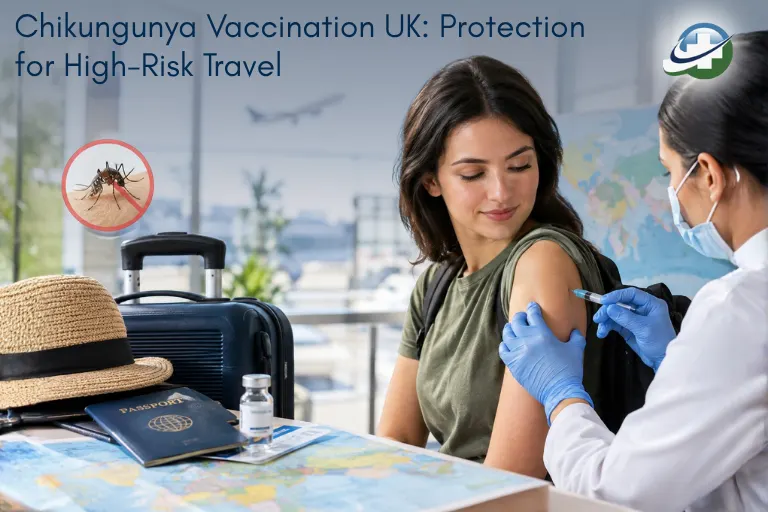
A chikungunya vaccine works by preparing your immune system to recognise and respond to the virus, reducing the likelihood of infection or the severity of illness if you’re exposed. In the UK, the vaccine is generally offered through private travel clinics and specialist pharmacies rather than as a routine NHS jab, since it’s aimed specifically at people travelling to areas where the virus is actively circulating.
Who Should Consider It
Chikungunya vaccination is usually recommended for people travelling to regions with confirmed outbreaks or ongoing transmission, particularly if the trip involves:
- Extended stays in affected areas rather than short city breaks
- Rural or outdoor-heavy itineraries where mosquito exposure is higher
- Travel during rainy seasons, when mosquito populations peak
- Visits to friends and relatives, where accommodation may offer less mosquito protection than hotels
- Pre-existing joint conditions, where chikungunya-related joint pain could be more severe or long-lasting
A pharmacist or travel health advisor can assess your itinerary, health history and departure date to work out whether vaccination makes sense for your specific trip. If your route runs through several countries, our travel vaccinations for South-East Asia guide breaks down region-by-region risk, which is a useful starting point for planning multi-country trips.
How It Fits Into a Wider Travel Health Plan
Vaccination against chikungunya should never be treated as a standalone solution. It works best as one layer within a broader travel health strategy that includes other relevant vaccines, insect bite avoidance and general pre-trip planning. Many destinations at risk of chikungunya carry overlapping risks for other diseases, so it’s worth reading up on whether you also need a typhoid vaccine before travelling or a hepatitis A vaccine, both of which are common recommendations for the same regions.
Chikungunya Prevention Beyond the Vaccine
Vaccination reduces your risk, but it doesn’t eliminate it entirely, and it doesn’t protect against other mosquito-borne diseases circulating in the same regions. That’s why chikungunya prevention advice always includes bite avoidance alongside any vaccine you receive.
Non-Vaccine Prevention Measures
- Use insect repellent containing DEET or a comparable active ingredient, reapplying as directed, especially during daylight hours when Aedes mosquitoes are most active
- Wear long sleeves and trousers in light colours, particularly at dawn and dusk
- Sleep under mosquito nets or in air-conditioned, screened accommodation where possible
- Remove standing water near where you’re staying, since Aedes mosquitoes breed in even small amounts of stagnant water
- Check official travel advisories for the specific region and time of year you’re visiting, as outbreak patterns shift seasonally
Combining these habits with vaccination gives you a much stronger layer of protection than relying on any single measure alone.
Chikungunya Vaccination vs Other Travel Vaccines
Understanding how chikungunya vaccination compares with other travel jabs can help you plan your pre-trip appointments more efficiently, particularly if you’re combining several vaccines ahead of a multi-country itinerary.
| Vaccine | Disease Risk | Typical Traveller Profile | Route |
| Chikungunya | Mosquito-borne viral illness, severe joint pain | Travellers to outbreak-affected regions, longer stays, rural travel | Injection, single or two-dose course depending on formulation |
| Yellow Fever | Mosquito-borne viral illness, can be severe | Travel to parts of Africa and South America, often a legal entry requirement | Single injection |
| Rabies | Viral illness from animal bites or scratches | Rural travel, wildlife exposure, longer stays | Pre-exposure course of injections |
| Typhoid | Waterborne bacterial illness | Travellers to regions with limited access to safe food and water | Injection or oral course |
Because requirements and recommendations vary so much by destination and itinerary, it’s worth reviewing your full route with a pharmacist so nothing gets missed, and so you’re not paying for cover you don’t actually need.
Benefits of Getting Vaccinated Before You Travel
- Reduced risk of infection. Vaccination lowers your chances of catching chikungunya during your trip, which matters most in areas with active or recent outbreaks.
- Milder illness if exposed. Even where vaccination doesn’t prevent infection entirely, it can reduce the severity and duration of symptoms.
- Fewer disruptions to your trip. Avoiding a fever-and-joint-pain illness mid-holiday or mid-business-trip protects the time and money you’ve already invested.
- Peace of mind for higher-risk travellers. Older travellers or those with joint conditions can travel with more confidence knowing they’ve taken a proactive step.
- A more complete pre-travel health picture. Getting vaccinated encourages a wider conversation about other risks on your itinerary, from food and water safety to insect bite prevention.
Common Use Cases: Who Actually Needs This Vaccine
- Long-term expatriates and contract workers relocating to a country with ongoing chikungunya transmission for months at a time
- Volunteers and aid workers heading to rural or under-resourced areas where mosquito control infrastructure is limited
- Retirees and older travellers taking extended holidays to regions such as South and Southeast Asia or the Indian Ocean islands
- Backpackers and adventure travellers with itineraries that include jungle treks, rural homestays or multi-week overland routes
- Business travellers with recurring trips to the same high-risk region, where cumulative exposure over multiple visits increases overall risk
If your travel plans match any of these profiles, it’s worth booking a pre-travel consultation well ahead of departure to see whether vaccination is appropriate for you.
Best Practices for Planning Your Travel Vaccinations
- Book your travel health appointment early. Some vaccines need multiple doses spaced weeks apart, so leaving it until the last minute can mean you’re not fully protected by departure. Our post on what to expect from a travel clinic appointment walks through the whole process, so there are no surprises on the day.
- Bring your full itinerary to the consultation. Dates, regions, accommodation type and planned activities all affect which vaccines and precautions are recommended.
- Disclose your full medical history. Existing conditions, current medications and previous vaccine reactions all influence what’s suitable for you.
- Ask about dosing schedules. Vaccine dosing can vary depending on age, health status and the specific product used, so always confirm the schedule that applies to you directly with your pharmacist or check the details on the Vaccines & Doses page.
- Pair vaccination with bite prevention. Pack repellent, appropriate clothing and a mosquito net if needed, and don’t treat the vaccine as your only line of defence.
- Review your itinerary for overlapping risks. If you’re visiting a region with cholera risk alongside chikungunya, it’s worth reading about the cholera vaccine and high-risk destinations during the same trip planning.
Common Mistakes to Avoid
- Leaving it too late. Booking a travel vaccination appointment days before departure limits your options and may mean you travel without full protection.
- Assuming one vaccine covers everything. Chikungunya vaccination doesn’t protect against dengue, malaria or other region-specific risks, all of which need separate consideration.
- Skipping bite prevention because you’re vaccinated. Repellent and protective clothing remain essential even after vaccination.
- Not mentioning existing health conditions. Certain conditions or medications can affect vaccine suitability, so full disclosure during your consultation matters.
- Ignoring destination-specific advisories. Outbreak patterns shift seasonally, so advice that applied on a previous trip may not apply this time.
- Forgetting follow-up doses. If your vaccine requires more than one dose, missing the second appointment can leave you under-protected.
Frequently Asked Questions
Is chikungunya vaccination available in the UK?
Yes. Chikungunya vaccination is available through private travel clinics and specialist pharmacies in the UK, including at Chertsey Pharmacy’s travel clinic, rather than as a routine NHS vaccination.
Who needs a chikungunya vaccine before travelling?
Travellers heading to regions with active or recent chikungunya outbreaks, particularly those on extended stays, rural itineraries, or with existing joint conditions, are most commonly advised to consider it.
How far in advance should I get vaccinated?
It’s best to book a travel health consultation several weeks before departure, since some vaccines require multiple doses spaced apart to build full protection.
Does the vaccine protect against other mosquito-borne diseases?
No. Chikungunya vaccination only protects against chikungunya. Other risks such as dengue or malaria require separate prevention measures and, in some cases, separate vaccines.
Can I get chikungunya more than once?
Reinfection is considered rare after natural infection, but vaccination is still the recommended route for travellers who haven’t previously had the illness and are heading to a risk area.
Where can I check the correct dosing schedule?
Dosing depends on the specific vaccine product and your individual health profile, so it’s best confirmed directly with a pharmacist. You can also review general dosing information on the Vaccines & Doses page before your appointment.
Do I still need insect repellent if I’m vaccinated?
Yes. Vaccination reduces risk but doesn’t replace bite avoidance measures like repellent, protective clothing and mosquito nets, which remain essential in high-risk areas.
For deeper background on how chikungunya spreads and current outbreak regions, resources like TravelHealthPro offer detailed, regularly updated guidance for UK travellers.
Book Your Chikungunya Vaccination at Chertsey Pharmacy
Planning travel to a region with chikungunya risk shouldn’t mean guessing what protection you need. At Chertsey Pharmacy, our team reviews your full itinerary, health history and departure timeline to put together a vaccination plan that actually fits your trip, whether that’s chikungunya vaccination alone or a combined approach covering other travel risks along the way.
Don’t leave your travel health to the last minute. Book your appointment today and travel with the confidence that comes from proper preparation.