
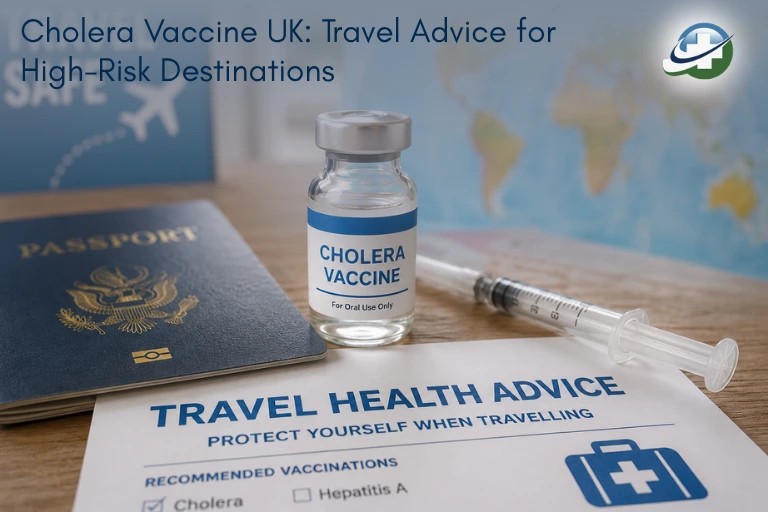
Travelling to parts of Africa, Asia, or Latin America this year? If your itinerary includes areas with limited access to clean water and sanitation, understanding the Cholera Vaccine UK requirements should be part of your pre-departure checklist. Cholera remains a genuine risk in several high-risk destinations, and knowing when vaccination is recommended can make the difference between a smooth trip and a serious health scare. This guide breaks down everything UK travellers need to know about cholera protection, the oral cholera vaccine, and how to plan your travel health properly before you fly.
What Is Cholera and Why It Matters for Travellers
Cholera is a bacterial infection that spreads through contaminated water and food, most often in regions where sanitation infrastructure is poor or has broken down after flooding, conflict, or displacement. The illness causes severe diarrhoea and dehydration, and in rapid-onset cases it can become dangerous within hours if untreated. For most UK residents, cholera is not something encountered day to day. For international travellers heading into affected regions, though, it’s a real and preventable risk worth planning for ahead of time.
This is exactly where the Cholera Vaccine UK conversation becomes relevant. Vaccination isn’t recommended for every trip abroad, but for certain routes and travel styles, it’s a sensible layer of protection alongside good food and water hygiene.
Understanding the Cholera Vaccine UK Guidelines
In the UK, cholera vaccination is generally reserved for travellers heading to areas with active outbreaks or a documented history of cholera transmission, particularly if their trip involves working in humanitarian settings, backpacking through rural areas, or visiting regions with limited healthcare access. The vaccine is typically administered as an oral cholera vaccine rather than an injection, which makes it a comparatively straightforward addition to a pre-travel health plan.
Because eligibility depends on destination, itinerary, and personal medical history, it’s worth having a proper travel health consultation rather than guessing whether you need it. A pharmacist or travel health specialist can review your route and flag whether cholera protection applies to your specific trip. You can start by checking the Cholera Vaccine page for current guidance on eligibility and course requirements.
Who Should Get the Oral Cholera Vaccine
Not every traveller needs this vaccine, but certain groups are considered higher priority:
- Aid workers, healthcare volunteers, or those deployed to disaster or refugee response zones
- Travellers visiting areas with an active cholera outbreak
- People with reduced stomach acid, prior gastric surgery, or conditions that increase susceptibility to gastrointestinal infections
- Long-stay travellers or backpackers with limited access to safe food and water
- Those visiting friends and family in rural or under-resourced regions of high-risk countries
If you fall into any of these categories, raising the topic during a travel clinic appointment is a smart move well before departure.
How the Vaccine Works
The oral cholera vaccine works by prompting the immune system to recognise and respond to the bacteria responsible for cholera, reducing the likelihood of severe illness if exposure occurs. It’s usually given as a course rather than a single dose, and timing matters, since immunity needs time to build before you travel. For exact dosing schedules and current course requirements, it’s best to check directly with a registered travel clinic, since guidance can be updated based on current outbreak data.
High-Risk Destinations Explained
Cholera risk isn’t evenly spread across the globe. It tends to cluster in regions facing water infrastructure challenges, recent natural disasters, or ongoing humanitarian crises. Areas that have historically reported higher cholera activity include parts of Sub-Saharan Africa, South Asia, and areas of the Middle East and Caribbean affected by conflict or flooding.
Risk levels can shift quickly depending on rainy seasons, outbreaks, and regional infrastructure, which is why relying on outdated travel advice is risky. Before booking a trip to any of these regions, it’s worth checking current country-specific risk data on TravelHealthPro, the UK’s official travel health resource run by the UK Health Security Agency, and speaking with our Travel Clinic Services team for a personalised assessment.
Vaccinated vs Unvaccinated Travellers: A Quick Comparison
| Factor | Vaccinated Traveller | Unvaccinated Traveller |
| Protection against severe cholera symptoms | Significantly reduced risk | No specific protection |
| Peace of mind in high-risk regions | Higher | Lower, especially in outbreak zones |
| Reliance on food and water hygiene alone | Still important, but with added backup | Sole line of defence |
| Suitability for aid work or rural travel | Recommended | Not advised without vaccination |
| Preparation time needed | Requires planning ahead of travel | None, but risk remains unmanaged |
This comparison isn’t meant to suggest the vaccine replaces basic hygiene precautions. Rather, it works alongside safe eating and drinking habits to give travellers a stronger overall defence.
Benefits of Getting Vaccinated Before You Travel
Choosing to get vaccinated ahead of a trip to a high-risk destination comes with several practical advantages:
- Reduced risk of severe illness. Vaccination lowers the chance of developing serious symptoms if exposed to the bacteria.
- Fewer disruptions to your trip. Falling ill abroad, especially in remote areas, can mean lost time, missed flights, or difficulty accessing medical care.
- Added protection for vulnerable travellers. Those with existing health conditions benefit from an extra layer of defence.
- Convenience of oral administration. No injection is required, making the process simple and quick to complete.
- Support for humanitarian and long-term travel. Aid workers and volunteers in affected regions face repeated exposure risk, making vaccination a practical safeguard.
Common Use Cases for the Cholera Vaccine
Understanding real-world scenarios can help clarify whether this vaccine applies to your own travel plans.
Backpacking through rural Southeast Asia or East Africa. Travellers on extended trips through areas with limited access to bottled water or hygienic food preparation are a common use case for cholera protection.
Humanitarian and aid work. Volunteers heading into disaster response zones or refugee camps face elevated exposure risk and are frequently advised to get vaccinated.
Visiting family in high-risk regions. Travellers visiting relatives in rural parts of affected countries often eat and drink as locals do, which can increase exposure compared with staying in tourist-oriented accommodation.
Cruise or expedition travel with regional stopovers. Itineraries that include ports in cholera-affected areas may warrant a precautionary consultation, even for short stays. Many travellers heading to these regions also consider protection against other risks, such as the Typhoid Vaccine, since the two often overlap in high-risk destinations.
Best Practices for Travel Health Planning
Getting the timing and preparation right makes a real difference. Some best practices worth following:
- Book your travel health consultation early. Ideally four to six weeks before departure, since some vaccines need time to take full effect.
- Share your full itinerary with your pharmacist or travel nurse. Even short stopovers in high-risk countries matter.
- Combine vaccination with hygiene habits. Bottled or treated water, thoroughly cooked food, and careful handwashing remain essential regardless of vaccination status.
- Keep a record of your vaccination history. This helps avoid unnecessary repeat doses and speeds up future travel planning.
- Check for updated outbreak advisories close to your departure date. Risk levels can change quickly in response to flooding or conflict.
Common Mistakes to Avoid
Even well-prepared travellers slip up in a few predictable ways:
- Leaving vaccination planning until the last minute. Some vaccines require a course over several days or weeks, so booking late can mean travelling without full protection.
- Assuming all destinations carry equal risk. Cholera risk varies significantly by country and even by region within a country.
- Skipping hygiene precautions after vaccination. The vaccine reduces risk but doesn’t eliminate it, so food and water safety still matter.
- Relying on outdated travel forums instead of professional advice. Health guidance changes, and a registered travel clinic will have the most current information.
- Not disclosing existing health conditions. Certain conditions can affect vaccine suitability, so full disclosure during your consultation is important.
How Chertsey Pharmacy Supports Your Travel Vaccination Needs
Chertsey Pharmacy runs a dedicated travel clinic offering guidance on cholera vaccination alongside a wider range of travel vaccines, including the Hepatitis A Vaccine, typhoid, and yellow fever. The team reviews your destination, travel style, and personal health background before recommending which vaccines are appropriate for your trip.
If you’re unsure whether your itinerary falls into a high-risk category, our travel clinic team can talk you through current advisories and help you plan a vaccination schedule that fits your departure date. For full details on courses and current recommendations, visit the Vaccines & Doses page.
FAQs
- Do I need the cholera vaccine for every trip abroad?
No. Most international trips don’t require cholera vaccination. It’s generally recommended for travellers heading to specific high-risk regions, particularly those doing aid work, long-term travel, or visiting areas with limited sanitation infrastructure. - Is the cholera vaccine given as an injection?
No, it’s administered orally rather than by injection, which many travellers find more convenient than a traditional jab. - How far in advance should I get vaccinated before travelling?
It’s best to book a consultation at least four to six weeks before departure, since the vaccine is typically given as a course and needs time to build immunity. - Does the vaccine fully protect me from cholera?
No vaccine offers complete protection. It significantly reduces the risk of severe illness, but safe food and water practices remain essential during your trip. - Where can I get travel health advice and the oral cholera vaccine in the UK?
Registered travel clinics and pharmacies can assess your itinerary and advise whether vaccination is appropriate for your trip. If you’re also researching other travel-related jabs, our guide on the Typhoid Vaccine UK covers similar destination-based risk factors. - Can I get the cholera vaccine alongside other travel vaccines?
In many cases, yes. A travel health consultation will review your full vaccination history and current itinerary to plan the right combination and timing for your trip.
Conclusion
Planning international travel to a high-risk destination involves more than booking flights and packing bags. Understanding your exposure risk and taking the right precautions, including the Cholera Vaccine UK where appropriate, helps protect your health and keeps your trip on track. Whether you’re travelling for aid work, backpacking through remote regions, or visiting family abroad, a proper travel health assessment ensures you’re making informed decisions rather than guesswork.
If your upcoming trip includes any high-risk regions, don’t leave your travel health planning to the last minute. Book a consultation with the travel clinic team to review your itinerary, discuss the oral cholera vaccine, and get a personalised vaccination plan ahead of your departure date. Safe travels start with the right preparation, and getting expert advice early gives you the best chance of a healthy, worry-free trip.
Ready to plan your travel vaccinations? Book your appointment with Chertsey Pharmacy’s travel clinic today and travel with confidence.