
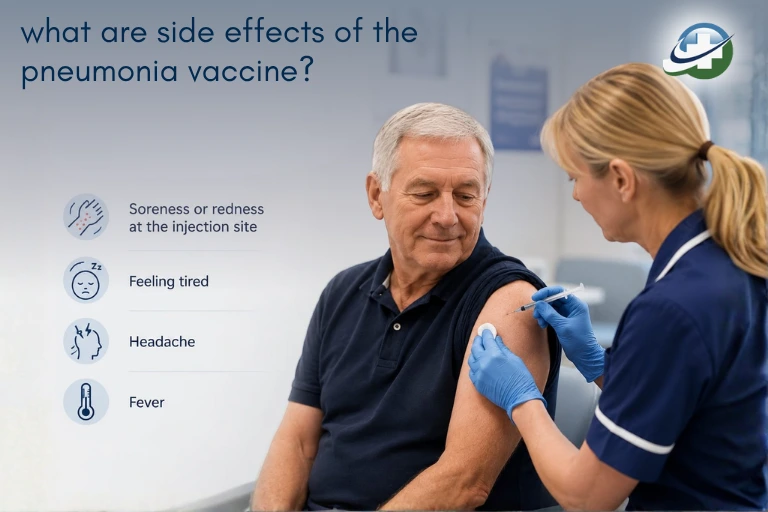
If you or someone you love just got the pneumonia vaccine, and now your arm is sore or you feel a little off, you are not imagining things. Those reactions are real, they are common, and in most cases, they are a sign your immune system is doing exactly what it is supposed to do.
But it is also completely fair to want the full picture before getting any vaccine. How bad can the side effects actually get? How long do they last? When should you genuinely worry? This guide answers all of that in plain, simple language, no medical jargon overload.
Most pneumonia vaccine side effects are mild and go away within 1 to 3 days. Serious reactions are very rare. Keep reading for the full breakdown.
What Are the Common Side Effects of the Pneumonia Vaccine?
These are the reactions most people notice, and they are considered completely normal.
Injection Site Reactions
This is what the majority of people experience. The spot where the needle went in may feel:
- Sore or tender when you press on it
- Swollen or a little puffy
- Red or warm to the touch
- Occasionally hard or firm under the skin for a day or two
These reactions usually show up within a few hours of the shot and peak around day 1 or 2. By day 3, most people barely notice anything.
General Body Reactions
Beyond the arm, some people feel a general sense of being under the weather. This can include:
- Fatigue or tiredness that feels more than usual
- Low-grade fever, typically under 101 degrees Fahrenheit
- Muscle aches or general body soreness
- Headache
- Chills, though this is less common
These body-wide symptoms are more common with PCV20 and in people getting their first dose. They also tend to be more noticeable in younger adults than in older adults, which surprises some people but makes sense immunologically.
Note: Feeling tired or run-down after a vaccine is your immune system building protection. It is not the vaccine making you sick.
How Long Do Side Effects Last?
Most side effects from the pneumonia vaccine clear up on their own within 1 to 3 days. Here is a rough timeline:
- Day 0 to 6 hours: Injection site starts to feel sore, redness may appear
- Day 1: Soreness peaks, fatigue and mild fever may start
- Day 2: Most people start feeling better, swelling begins to go down
- Day 3 to 5: Almost everything should be gone
If your symptoms are still going strong after 5 days, or if they seem to be getting worse rather than better, that is worth a call to your doctor.
Are There More Serious Side Effects?
Yes, though they are genuinely rare. It is important to know about them without overstating how likely they are.
Severe Allergic Reaction (Anaphylaxis)
This is the most serious potential reaction, and it almost always happens within 15 to 30 minutes of getting the shot. That is why healthcare providers ask you to wait after vaccination. Signs include:
- Difficulty breathing or wheezing
- Rapid heartbeat
- Swelling of the face, lips, tongue, or throat
- Dizziness or feeling faint
- Hives or a spreading rash across the body
Anaphylaxis after the pneumonia vaccine is estimated to occur in roughly 1 to 2 cases per million doses. That is extremely rare. But it is a medical emergency if it does happen. Call 911 or get to an emergency room immediately.
High Fever
A fever over 103 degrees Fahrenheit is not typical. If you develop one within a day or two of your shot, check in with your doctor. It could still be related to the vaccine, but it can also mean something else is going on.
Severe Injection Site Reaction
In rare cases, people develop significant swelling, warmth, or redness that spreads well beyond the injection site. If the redness is expanding, there is increasing pain, or you see streaks spreading outward, get it checked. This could signal a secondary infection.
When to Go to the ER: Difficulty breathing, throat swelling, severe dizziness, or a rapid heart rate after vaccination. These need immediate attention.
Side Effects by Age Group
The pneumonia vaccine does not affect everyone the same way. Age plays a real role in how your body responds.
Infants and Young Children
- Fussiness or irritability, which is the most common
- Loss of appetite
- Crying more than usual
- Mild fever
- Drowsiness or sleeping more than normal
These reactions typically last 1 to 2 days. Giving your child age-appropriate pain relief such as acetaminophen can help. Always check the dose with your pediatrician.
Adults 19 to 64
Healthy younger adults tend to have a stronger immune response, which can mean slightly more noticeable symptoms. Arm soreness and fatigue are the most reported complaints in this group.
Adults 65 and Older
Older adults often report fewer or milder local reactions but may still experience fatigue. Their immune response is generally less intense, which is partly why vaccination is so important for this group. Their bodies need the head start a vaccine provides.
Tips to Manage Side Effects at Home
You do not have to just sit with discomfort. These practical steps genuinely help:
For Arm Pain and Swelling
- Apply a clean, cool, damp cloth to the area for 10 to 20 minutes at a time
- Keep moving your arm gently rather than holding it completely still
- Avoid pressing or rubbing the injection site
- Over-the-counter pain relievers like ibuprofen or acetaminophen can reduce soreness. Ask your doctor first if you have health conditions that limit these
For Fever and Body Aches
- Drink plenty of water. Staying hydrated helps your body process the immune response
- Rest when you need to. Do not push through extreme fatigue
- Light, easy-to-digest food if your appetite is off
- Acetaminophen or ibuprofen for fever over 100.4 degrees Fahrenheit
One thing worth knowing: some doctors suggest not pre-medicating with pain relievers before the shot. There is some evidence it might slightly reduce your immune response. Ask your provider what they recommend.
What Causes These Side Effects? (The Simple Version)
When the vaccine enters your body, your immune system sees the fragments of bacteria it contains and mounts a response. It recruits immune cells, creates inflammation, and starts building antibodies. That whole process creates what you feel as soreness, redness, and fatigue.
In other words, the side effects are evidence the vaccine is working. They are not damaged, they are defense-building. That framing does not make the soreness disappear, but it helps to understand why it is happening.
Who Should Be Careful or Consult a Doctor Before Getting the Vaccine?
Most people can and should get the pneumonia vaccine without concern. However, you should let your provider know if:
- You had a severe allergic reaction to a previous dose of a pneumococcal vaccine
- You are allergic to any ingredients in the vaccine, including diphtheria toxoid, which is in the conjugate vaccines
- You are currently sick with more than a mild illness, in which case your doctor may suggest waiting
- You are pregnant, so your provider can weigh benefits and risks with you
- You have a bleeding disorder or are on blood thinners, since this can affect how the injection site heals
Having a chronic condition like diabetes, heart disease, or asthma is not a reason to skip the vaccine. It is often the reason it is more important to get it.
Frequently Asked Questions
Can the pneumonia vaccine give you pneumonia?
No. The pneumonia vaccines available today do not contain live bacteria. They use either pieces of the bacterial surface (polysaccharide vaccines) or those pieces attached to a carrier protein (conjugate vaccines). Neither can cause an infection. Feeling unwell after the shot is your immune response, not an infection.
Is it normal to feel tired for a few days after the shot?
Yes, this is one of the most common reactions people report. Fatigue after vaccination is a real immune response. Rest, stay hydrated, and give yourself a day or two to recover. If it stretches beyond 5 days, call your doctor.
Can I take ibuprofen before my shot to prevent pain?
Some doctors advise against it, as there is evidence it may blunt the immune response slightly. It is fine to take pain relievers after the vaccine if needed, but check with your provider about taking them beforehand.
My arm is still sore after a week. Should I worry?
Mild tenderness can sometimes linger a bit, but significant soreness, increasing redness, or warmth after 7 days is worth getting checked out. It is rare but possible to develop a local infection at the injection site.
Can I get the flu vaccine and pneumonia vaccine at the same time?
Yes. Studies and clinical practice both support giving these vaccines on the same day, just in different arms. There is no evidence of increased side effects from receiving both together. It is actually a common and convenient approach.
Is the pneumonia vaccine safe for people with autoimmune conditions?
Generally yes, and it is often especially recommended for them since these conditions or the medications used to treat them can increase infection risk. However, because the immune response may be altered, your specialist should help guide the timing and choice of vaccine.