
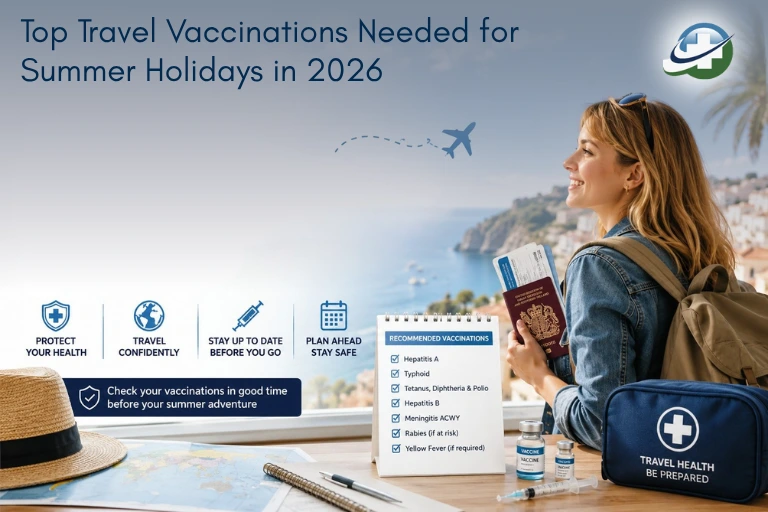
Planning a summer holiday this year? Whether you are heading to Southeast Asia, Africa, South America, or even parts of Southern Europe, making sure your vaccinations are up to date is one of the smartest things you can do before you board that flight. Travel vaccinations for summer 2026 have become a bigger topic than ever, and rightly so.
This guide walks you through everything you need to know, from which vaccines are recommended for popular destinations to how early you should book your travel health appointment. No confusing medical jargon, just clear and helpful information for anyone planning to travel this summer.
Why Travel Vaccinations Matter More Than You Think
A lot of people skip this step. They book flights, sort accommodation, buy travel insurance, and completely forget about vaccines. But here is the thing: diseases that your immune system has never encountered are the real risk when you travel abroad.
Your body is used to the germs in your home country. The moment you land in a different climate or region, you are exposed to bacteria and viruses that local populations may have built immunity to over generations, and you have not.
Travel vaccinations protect you from those diseases. They also protect the people you come back home to.
How Early Should You Get Vaccinated Before Travel?
This is one of the most common questions people ask, and the answer varies. Most travel health specialists recommend visiting a travel clinic at least 4 to 8 weeks before your departure date. Some vaccines require multiple doses spread over several weeks, so leaving it to the last minute limits your options.
That said, even if your trip is two weeks away, it is still worth going. Some single-dose vaccines can offer protection relatively quickly, and a travel health professional will advise you on the best options for your timeline.
Most Recommended Travel Vaccinations for Summer 2026
Here are the key vaccinations that travel health professionals commonly recommend based on destination type:
1. Hepatitis A
This is one of the most widely recommended travel vaccines, regardless of destination. Hepatitis A spreads through contaminated food and water, and it is present in many countries across Asia, Africa, Central America, and Eastern Europe.
If you are someone who enjoys street food or eating at local restaurants (and honestly, that is half the joy of travelling), this vaccine is especially important. It is given as an injection, and a booster dose later on can provide long-term protection.
2. Typhoid
Typhoid fever is another illness spread through contaminated food and water. It is particularly common in parts of South Asia, Southeast Asia, and sub-Saharan Africa. If you are visiting rural areas or places with limited sanitation, your risk goes up.
The good news is there are both injectable and oral options available, and your travel health clinic will help you choose the right one based on your destination and health history.
3. Yellow Fever
If you are travelling to parts of sub-Saharan Africa or tropical South America, yellow fever vaccination is not just recommended, it is often legally required for entry. Some countries will turn you away at the border without proof of vaccination.
Yellow fever is spread through mosquito bites, and while it is a serious disease, the vaccine is highly effective. Once vaccinated, most people are considered protected for life.
4. Hepatitis B
Hepatitis B is spread through blood and bodily fluids. It is relevant for travellers who might receive medical treatment abroad, get tattoos or piercings, or engage in activities that carry a risk of exposure. It is also routinely recommended for long-term travellers and those working in healthcare settings overseas.
The vaccine is given in a series of doses, which is another reason to plan ahead.
5. Japanese Encephalitis
This one often surprises people, but Japanese Encephalitis is a real risk for travellers spending extended time in rural parts of Asia, particularly during the summer and rainy season when mosquito activity is high. Countries like India, Thailand, Vietnam, and Cambodia fall within the affected region.
If your holiday involves outdoor activities, trekking, or staying near rice paddies and agricultural areas, speak to your travel health nurse about this vaccine.
6. Rabies
Rabies is a vaccine that many travellers overlook because they assume they will not be bitten by an animal. But dog bites, monkey scratches, and bat encounters are more common than people expect in many tourist destinations across Asia, Africa, and Latin America.
The pre-exposure vaccine does not mean you will never need treatment if bitten, but it does give you more time to reach proper medical care, which can be the difference between life and death in remote areas.
7. Meningococcal Meningitis
This vaccine is particularly relevant if you are travelling to the “Meningitis Belt” in sub-Saharan Africa, attending large gatherings, or visiting areas during disease outbreaks. Some countries in the Middle East also require proof of meningitis vaccination for pilgrims.
8. Cholera
Cholera vaccination is generally recommended for travellers going to areas with known outbreaks, those doing humanitarian or relief work, and backpackers travelling to regions with poor water and sanitation infrastructure. It is available as an oral vaccine.
Do Not Forget Your Routine Vaccinations
Before focusing entirely on destination-specific vaccines, make sure your routine vaccinations are current. These include:
- MMR (measles, mumps, and rubella)
- Tetanus and diphtheria
- Polio
Measles, in particular, has seen outbreaks in several countries in recent years, and adults who missed their childhood boosters can be at risk. Your GP can check your vaccination records and advise on any gaps.
Malaria: Not a Vaccine, But Still Essential
Malaria does not have a widely available vaccine for most adult travellers yet (though research is progressing), but it is important to mention here because it is one of the biggest health risks for summer travellers heading to tropical regions.
Malaria prevention comes through antimalarial tablets, mosquito repellents, protective clothing, and bed nets. Speak to your travel clinic about the right prevention strategy for your specific destination.
How to Find a Travel Health Clinic
In the UK, you can visit your GP, a travel health clinic, or a registered pharmacy that offers travel health services. Many high street pharmacies now have trained travel health nurses on site.
Always make sure the clinic is registered and that the healthcare provider is qualified to give travel health advice.
Frequently Asked Questions About Travel Vaccinations
How long before traveling should I get vaccinated?
Ideally 4 to 8 weeks before departure, but even 1 to 2 weeks before travel is better than nothing for many vaccines.
Are travel vaccinations free?
In the UK, some vaccines like hepatitis A and typhoid may be available on the NHS if the destination qualifies. Others, like yellow fever and Japanese encephalitis, are usually paid for privately. Costs vary by clinic and country.
Can I get vaccinated while pregnant?
Some vaccines are safe during pregnancy and some are not. Always tell your travel health provider if you are pregnant or trying to conceive so they can advise appropriately.
Do I need vaccinations for Europe?
Most Western and Northern European destinations do not require specific travel vaccinations, but Eastern European or rural destinations may have recommendations for hepatitis A, tick-borne encephalitis, and rabies. Always check destination-specific guidance.
How do I know which vaccines I need?
A travel health consultation is the best approach. The clinician will assess your destination, travel style, length of stay, and personal health history to give you tailored advice.
Are there any side effects from travel vaccines?
Mild side effects like a sore arm, low fever, or fatigue are common after vaccination. Serious reactions are rare. Your clinic will advise you on what to expect.
Can children get travel vaccinations?
Yes. Many travel vaccines are suitable for children, though dosages and schedules may differ. Always consult a paediatric-friendly travel clinic if travelling with young children.
Final Thoughts
Sorting out your travel vaccinations for summer 2026 does not need to be stressful. The key is to plan early, book a consultation with a registered travel health professional, and follow the advice specific to your destination and itinerary.
Think of it this way: you spend months planning the perfect holiday. A visit to the travel clinic takes an hour and could be the most important hour of your trip planning. Stay protected, stay informed, and enjoy every moment of your summer abroad.