
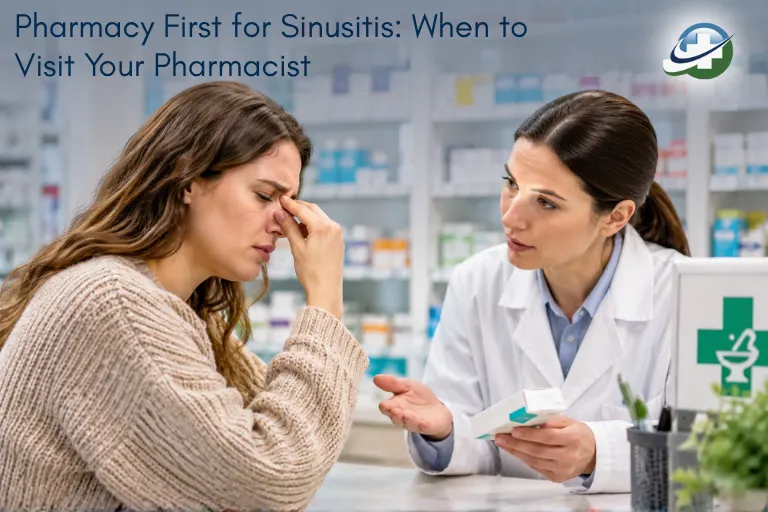
If your face feels heavy, your nose won’t clear, and a GP appointment feels weeks away, the NHS Pharmacy First Sinusitis service was built exactly for this moment. Instead of waiting on hold or sitting in a GP waiting room, you can walk into a participating pharmacy and get a clinical assessment, advice, and, where appropriate, treatment on the same day. For anyone dealing with sinus pressure, congestion, or facial pain, understanding how this service works can save days of discomfort and unnecessary waiting.
This guide walks through what sinusitis is, how Pharmacy First Sinusitis consultations work, who is eligible, what to expect during a visit, and how to tell the difference between symptoms a pharmacist can manage and symptoms that need urgent medical attention.
Table of Contents
- What Is Sinusitis?
- What Is the NHS Pharmacy First Service?
- Pharmacy First Sinusitis: Eligibility and When to Visit
- How a Pharmacy First Consultation Works
- Sinus Infection Treatment Options Through Pharmacy First
- Pharmacy First vs the Traditional GP Route
- Benefits of Choosing Pharmacy First for Sinusitis
- Real-Life Use Cases
- Best Practices for Managing Sinusitis
- Common Mistakes to Avoid
- Why Choose Chertsey Pharmacy
- Frequently Asked Questions
- Conclusion and Next Steps
What Is Sinusitis?
Sinusitis happens when the lining of the sinuses, the air-filled spaces behind your cheekbones, forehead, and nose, becomes inflamed. It’s usually triggered by a cold, flu, or another upper respiratory infection, though allergies and irritants can also set it off. If you’re not sure whether hay fever or a genuine sinus infection is behind your symptoms, it’s worth knowing that pharmacists can also treat allergy symptoms without a GP visit. Most cases of sinusitis are viral and clear up on their own within one to two weeks. A smaller number become bacterial, particularly when symptoms drag on past ten days or seem to improve before suddenly getting worse again.
Typical symptoms include facial pain or pressure around the cheeks, forehead, or eyes, a blocked or runny nose, thick nasal discharge, reduced sense of smell, headache, and general fatigue. For most people these symptoms are unpleasant but manageable at home. For others, especially when symptoms persist or worsen, professional assessment matters, which is exactly where the NHS Pharmacy First Sinusitis pathway comes in.
What Is the NHS Pharmacy First Service?
NHS Pharmacy First is a service that lets trained community pharmacists assess and treat a defined list of common conditions without a GP referral. It was introduced to ease pressure on GP surgeries and give patients faster access to care for conditions that don’t need a doctor’s diagnosis to be safely managed.
Conditions Covered Under Pharmacy First
The service typically covers sinusitis, sore throat, earache, infected insect bites, impetigo, shingles, and uncomplicated urinary tract infections in women aged 16 to 64. If you’ve dealt with any of these before, from an infected skin bite to a case of impetigo, you already have a sense of how the pathway works: a pharmacist assesses your symptoms against set clinical criteria and decides on advice, treatment, or referral. Sinusitis follows the same structure, and pharmacists follow national clinical pathways to decide the right course of action.
Pharmacy First Sinusitis: Eligibility and When to Visit
Not every blocked nose needs a pharmacy consultation, and not every sinus infection is suitable for the Pharmacy First route. Knowing the difference helps you get the right care faster.
Signs You May Have Sinusitis
Consider a Pharmacy First Sinusitis consultation if you are experiencing facial pain or pressure, nasal congestion with thick discharge, a reduced sense of smell, or a headache that seems centred around your sinuses, especially if symptoms have lasted more than a week without improving. The service is generally available to patients aged 12 and over, so parents of younger children experiencing sinus symptoms should still speak to a GP or NHS 111.
When to See a Pharmacist vs Your GP vs A&E
A pharmacist is the right first stop when symptoms have lasted around ten days without improvement, or when symptoms initially improved and then suddenly worsened again, which can suggest a secondary bacterial infection. These patterns are exactly what the clinical pathway looks for when deciding whether treatment beyond self-care is appropriate.
Some symptoms sit outside what a pharmacy consultation can safely manage and need urgent medical attention instead. Swelling or redness around the eyes, double vision or vision changes, a severe one-sided headache, a high fever with drowsiness or confusion, or any sign of a stiff neck or sensitivity to light are red flags. If you or someone you’re with experiences these, contact NHS 111, your GP urgently, or go to A&E rather than waiting for a pharmacy appointment.
How a Pharmacy First Consultation Works
Walking into a Pharmacy First Sinusitis consultation is straightforward. You describe your symptoms and how long they’ve lasted, and the pharmacist asks a set of clinical questions to rule out red flags and assess whether your symptoms are more likely viral or bacterial. This might include checking how long you’ve had symptoms, whether they’re improving or worsening, and whether you have any other health conditions or are taking medication that could affect treatment.
Based on that assessment, the pharmacist will either recommend self-care measures, suggest an over-the-counter option, offer a prescription-only treatment where clinically indicated, or refer you on to your GP or urgent care if your symptoms fall outside the scope of the service. The whole process is usually completed in a single visit, with no appointment booked weeks in advance.
Sinus Infection Treatment Options Through Pharmacy First
Because most sinusitis is viral, the first-line approach for the majority of patients is supportive self-care rather than medication. Where a pharmacist judges that a bacterial infection is likely, based on the duration and pattern of your symptoms, they can offer treatment options in line with national prescribing guidance, which may include a nasal treatment or, in specific cases, a short course of antibiotics.
We deliberately don’t list specific medicine names or dosages here, because the right option depends entirely on your individual assessment, any allergies, other medication you’re taking, and current NHS clinical criteria, which can be updated. For accurate, current information on what treatment might be suitable for you, visit Chertsey Pharmacy or speak with our team directly.
Pharmacy First vs the Traditional GP Route
| Factor | Pharmacy First Sinusitis Service | Traditional GP Appointment |
| Waiting time | Often same-day, walk-in or short booking | Can range from days to weeks |
| Appointment needed | Usually no, or a quick booking | Yes, booked in advance |
| Cost to patient | Free NHS consultation | Free NHS consultation |
| Clinical assessment | Trained pharmacist, defined clinical pathway | GP, broader diagnostic scope |
| Best suited for | Sinusitis without red flag symptoms | Complex, recurring, or red flag symptoms |
| Access point | Local pharmacy, extended opening hours | GP surgery, standard hours |
| Referral option | Yes, if symptoms fall outside scope | Direct access to further tests/specialists |
This comparison isn’t about one route being universally better. It’s about matching the right level of care to your symptoms. Straightforward sinusitis without warning signs is well suited to Pharmacy First. Anything more complex, recurring, or accompanied by red flags still belongs with your GP.
Benefits of Choosing Pharmacy First for Sinusitis
The most obvious benefit is speed. Sinus symptoms are miserable, and getting assessed within a day or two, rather than waiting a week or more for a GP slot, means less time spent in discomfort. There’s also the convenience factor: pharmacies tend to have longer opening hours and don’t always require advance booking, which suits people juggling work or family commitments.
Clinical consistency matters too. Pharmacists follow the same national clinical pathways GPs use for these conditions, so you’re not getting a lesser standard of assessment, just a faster and more accessible one. The service is also free at the point of use for the consultation itself, and it helps reduce pressure on GP surgeries so appointments stay available for patients who need more complex care.
Real-Life Use Cases
A commuter who’s had congestion and facial pressure for twelve days but can’t get a GP appointment for another week is a textbook case for Pharmacy First. So is a parent whose symptoms briefly improved after a cold, then returned worse than before, a pattern that specifically prompts pharmacists to consider bacterial sinusitis. Someone travelling for work who develops sinus symptoms mid-week and needs a quick assessment before a flight can also walk into a participating pharmacy rather than trying to register as a temporary GP patient.
On the other end, someone who develops sudden swelling around one eye alongside sinus pain is not a Pharmacy First case, that’s a red flag requiring urgent same-day medical assessment rather than a pharmacy consultation.
Best Practices for Managing Sinusitis
Alongside any advice or treatment from a pharmacist, a few self-care habits genuinely help most cases of sinusitis settle faster. Staying well hydrated helps thin mucus, and warm steam inhalation, whether from a bowl of hot water or a hot shower, can ease congestion. A warm compress held against the face can relieve pressure around the cheeks and forehead, and getting proper rest gives your immune system the best chance to clear a viral infection on its own. Saline nasal rinses are another commonly recommended self-care measure worth asking your pharmacist about.
It’s also worth tracking your symptoms. Knowing exactly how many days you’ve had symptoms, and whether they’re improving, staying the same, or worsening, is genuinely useful information for a pharmacist to make a good clinical decision quickly.
Common Mistakes to Avoid
One of the most common mistakes is waiting too long to seek any advice at all, letting symptoms drag on for weeks out of a sense that “it’ll clear up eventually.” Another is the opposite problem: assuming every case of sinusitis needs antibiotics, when in reality most cases are viral and resolve without them. Overusing decongestant nasal sprays beyond the recommended short period can also cause rebound congestion that makes things worse, not better.
Ignoring red flag symptoms is a more serious mistake. Facial swelling, vision changes, or a high fever with confusion are not “wait and see” symptoms, and treating them as routine sinus discomfort can delay care that’s genuinely urgent. Finally, some people skip a consultation altogether and self-medicate with leftover antibiotics from a previous illness, which is both clinically risky and contributes to antibiotic resistance more broadly.
Why Choose Chertsey Pharmacy
Chertsey Pharmacy offers Pharmacy First Sinusitis consultations alongside a full range of NHS services, from UTI treatment to impetigo assessment, all delivered by an experienced, friendly team based in the heart of Chertsey. Because we’re a fully licensed community pharmacy, we can assess your symptoms against national clinical guidance, offer treatment where appropriate, and refer you onward quickly if your case needs a GP’s input. Chertsey Pharmacy also runs same-day prescription delivery across Chertsey and the surrounding area, which is useful if you’re too unwell to collect medication in person.
Frequently Asked Questions
- What is Pharmacy First Sinusitis and who can use it?
It’s an NHS service that lets trained pharmacists assess and, where appropriate, treat sinusitis without a GP referral. It’s generally available to patients aged 12 and over presenting with sinus symptoms. - Do I need to book an appointment for a sinus infection treatment consultation?
Many pharmacies accept walk-ins for Pharmacy First consultations, though booking ahead can reduce your wait. Check directly with your local pharmacy for their current process. - Will I always be given antibiotics for sinusitis?
No. Most sinusitis is viral and resolves with self-care alone. A pharmacist will only consider antibiotics when your symptoms fit the clinical pattern suggesting a bacterial infection. - How long does sinusitis usually last?
Viral sinusitis typically improves within one to two weeks. If symptoms last longer than ten days, or improve and then suddenly worsen, it’s worth getting assessed. - When should I skip the pharmacy and go straight to urgent care?
If you have swelling or redness around your eyes, vision changes, a severe one-sided headache, or a high fever with confusion, seek urgent medical attention rather than a pharmacy consultation. - Is the NHS Pharmacy First consultation free?
Yes, the consultation itself is free on the NHS. Standard prescription charges may apply if medication is prescribed, unless you’re exempt.
Can Chertsey Pharmacy tell me exactly which medicine or dose I need before I visit?
Not without an assessment. Treatment decisions depend on your individual symptoms, history, and current NHS clinical guidance, so this is confirmed during your consultation, not in advance.
Conclusion and Next Steps
Sinusitis is uncomfortable, but in most cases it doesn’t need a GP appointment to be managed well. The NHS Pharmacy First Sinusitis service gives you a faster, clinically sound way to get assessed, advised, and, where appropriate, treated, often on the same day you notice something isn’t right. Knowing when your symptoms fit this pathway, and when they need more urgent attention, helps you get the right care at the right time.
If you’re dealing with facial pressure, congestion, or sinus pain that isn’t settling, don’t wait it out. Book your consultation with Chertsey Pharmacy today, or contact us if you have questions before you come in. For further general reading on symptoms and self-care, the NHS sinusitis guide is a reliable reference.