
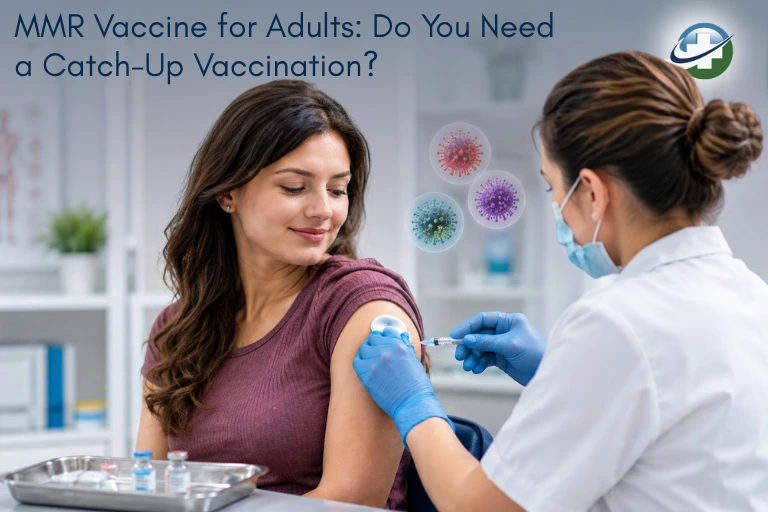
MMR Vaccine for Adults: Do You Need a Catch-Up Vaccination?
Meta Title: MMR Vaccine for Adults: Do You Need a Catch-Up Jab? | Chertsey Pharmacy Meta Description: Not sure if you’re protected against measles, mumps and rubella? Learn who needs the MMR vaccine adults catch-up dose, when to book, and what to expect.
Table of Contents
- Introduction
- What Is the MMR Vaccine and Why It Still Matters for Adults
- Who Needs an Adult MMR Catch-Up Vaccination
- How to Check Your Immunisation Status
- MMR Vaccine vs Natural Immunity: A Quick Comparison
- Benefits of Getting an MMR Booster as an Adult
- Common Use Cases: When Adults Typically Need MMR Protection
- Best Practices Before and After Your Appointment
- Common Mistakes Adults Make With MMR Immunisation
- How Chertsey Pharmacy Can Help
- Frequently Asked Questions
- Conclusion
Introduction
If you were born in the UK between the late 1970s and the mid-1990s, there is a real chance you never received full protection against measles, mumps and rubella. The MMR vaccine adults catch-up conversation has become increasingly relevant as measles outbreaks resurface across Europe and vaccination records from childhood get lost, misplaced, or were simply incomplete to begin with. Many people assume that because they had “some kind of jab” as a child, they are covered for life. That assumption is not always correct, and it is one of the most common reasons adults find themselves exposed later in life, often at the worst possible time, such as right before international travel or during pregnancy planning.
This guide walks through who actually needs a catch-up dose, how to check your own immunisation history, what the vaccination process looks like, and the mistakes that catch people out. Whether you are prepping for a trip abroad, starting a new healthcare role, or simply want peace of mind, understanding adult immunisation against MMR is a small step that carries a lot of protective value.
What Is the MMR Vaccine and Why It Still Matters for Adults
The MMR vaccine protects against three highly contagious viral illnesses: measles, mumps, and rubella. It is typically given in childhood as part of the NHS routine schedule, usually as two separate doses. The idea behind two doses is straightforward: the first dose builds initial immunity, and the second closes any gaps left behind, since a small percentage of people do not develop full protection after a single dose.
The reason this still matters for adults comes down to timing and history. The UK introduced the second MMR dose into the routine schedule later than some other countries, which means a cohort of adults, roughly those born from the late 1970s through the early 1990s, may have received only one dose, or none at all, depending on regional uptake at the time. Add to that the well documented dip in MMR uptake following the discredited autism scare in the late 1990s, and you get a meaningful population of adults today who are only partially immunised without realising it.
Rubella in particular carries serious risks for pregnant women, since infection during early pregnancy can cause congenital rubella syndrome in the baby. Mumps can lead to complications, and measles remains one of the most infectious diseases known, capable of spreading rapidly in any setting where immunity gaps exist, including universities, workplaces, and international airports.
Who Needs an Adult MMR Catch-Up Vaccination
Not every adult needs to rush out and book a jab, but several groups should take this seriously.
Adults Born Between the Late 1970s and Mid-1990s
This is the group most likely to have received only one dose, or an incomplete childhood schedule. If your parents cannot confirm two documented doses, or you have no access to your childhood health records, you likely fall into this category.
Healthcare and Care Sector Workers
Anyone working in a hospital, GP surgery, care home, or clinical setting is expected to demonstrate full MMR immunity, both to protect themselves and the vulnerable people they care for. Many employers now require documented proof before allowing staff into patient-facing roles.
International Travellers
Measles outbreaks have been reported across parts of Europe, Asia, and North America in recent years. Anyone travelling internationally, particularly to regions with lower vaccination coverage, benefits from confirming their MMR status before departure. This is a common reason people visit our travel vaccination clinic ahead of a booked trip.
Women Planning Pregnancy
Because MMR is a live vaccine, it cannot be given during pregnancy, which means the ideal time to check and top up immunity is before conception, ideally at least one month in advance.
University Students and Young Adults in Shared Accommodation
Close-contact living environments like halls of residence create ideal conditions for outbreaks. Students who missed a dose during childhood, similar to those catching up on a Meningitis ACWY vaccine before starting university, are frequently advised to check MMR status at the same time.
How to Check Your Immunisation Status
Before booking an MMR booster, it helps to establish what you actually know about your history. A few practical steps:
- Contact your GP practice and request your childhood immunisation records, which are sometimes retained on file even decades later.
- Ask a parent or guardian if they kept a personal child health record book (the “red book”) from your early years.
- If records are genuinely unavailable, it is considered safe to receive the MMR vaccine even if you may already be immune. There is no meaningful risk in having an additional dose if your history is uncertain.
Uncertainty is extremely common, and pharmacists are used to working with incomplete information. You do not need a perfect paper trail to move forward with a catch-up dose.
MMR Vaccine vs Natural Immunity: A Quick Comparison
| Factor | MMR Vaccination | Natural Infection (No Vaccine) |
| Protection reliability | Consistent, well-documented immune response | Depends on the individual case, sometimes incomplete |
| Health risk during exposure | Minimal, mild side effects only | Real risk of complications: pneumonia, encephalitis, hearing loss, congenital effects |
| Suitable during pregnancy | No, must be given before or after pregnancy | Infection during pregnancy poses serious risk to the baby |
| Community protection | Contributes to herd immunity, reduces outbreak risk | Only protects the individual after the fact, often after spreading the illness to others |
| Predictability | Scheduled, controlled, low-risk process | Unpredictable timing and severity |
The comparison makes the practical case fairly clear. Relying on “catching it naturally at some point” is not a strategy, it is a gamble with outcomes that range from mild to genuinely dangerous, particularly for anyone with underlying health conditions or those who are immunocompromised.
Benefits of Getting an MMR Booster as an Adult
- Closes immunity gaps left by incomplete childhood schedules, particularly for the cohort affected by historical uptake dips.
- Protects vulnerable contacts, including infants too young to be vaccinated and people with weakened immune systems.
- Removes travel-related uncertainty, since many countries and some employers now request proof of MMR immunity.
- Supports safer pregnancy planning, giving women time to build immunity before conception.
- Meets occupational health requirements for those working in clinical, educational, or care environments.
- Reduces community transmission risk, contributing to broader outbreak prevention across the UK.
Common Use Cases: When Adults Typically Need MMR Protection
- A new employee in healthcare or education asked to provide proof of immunisation before starting a role.
- A couple planning to start a family who want to confirm rubella immunity in advance.
- A traveller booking a trip to a region currently experiencing a measles outbreak.
- A university fresher preparing for shared accommodation and campus life.
- An adult who recently discovered, through a blood test or family conversation, that their childhood vaccination history is incomplete.
- Someone who was vaccinated abroad under a different schedule and wants UK-aligned documentation.
Best Practices Before and After Your Appointment
Preparing properly makes the process smoother and reduces unnecessary follow-up questions.
Before your appointment:
- Gather whatever documentation you have, even partial records help the pharmacist assess your situation.
- Mention any known allergies, particularly to gelatine or neomycin, as these are relevant to live vaccines.
- Flag if you are pregnant, trying to conceive, or immunocompromised, since timing matters here.
- Avoid booking your appointment if you currently have a high fever or acute illness; it is generally advised to wait until you have recovered.
After your appointment:
- Keep a record of the date and any documentation provided, ideally photographed and stored digitally as a backup.
- Mild soreness at the injection site or a slight temperature in the following days is normal and typically resolves quickly.
- Avoid pregnancy for the period advised by your pharmacist, since MMR is a live vaccine.
- If you experience anything beyond mild, expected side effects, contact your pharmacy or GP for advice.
Common Mistakes Adults Make With MMR Immunisation
- Assuming one childhood dose equals full protection. Two doses are needed for reliable, long-term immunity.
- Waiting until the week before travel. Immunity needs time to build, so last-minute bookings limit your options and add unnecessary stress.
- Not mentioning pregnancy plans. This is critical information that changes the entire timing conversation.
- Assuming a blood test is always required first. In many cases, if records are unclear, simply proceeding with vaccination is the practical route, rather than delaying over uncertain history.
- Ignoring workplace requirements until the deadline. Healthcare and care sector staff should confirm status early, not after an employer flags a gap.
- Overlooking family members. If one adult in a household is unsure of their status, it is worth checking with siblings or parents, since gaps often run in cohorts rather than isolated individuals.
How Chertsey Pharmacy Can Help
At Chertsey Pharmacy, our team regularly supports adults working through exactly this kind of uncertainty, whether that means reviewing available immunisation history, discussing travel timelines, or simply explaining what a catch-up schedule involves in plain terms. We also support related adult immunisation needs alongside our full range of private vaccination services, including protection relevant to shared living environments and travel preparation.
If you are also weighing up other adult vaccines you may have missed, our shingles vaccine service is worth reviewing too, and our guide to shingles vaccine eligibility in the UK covers a similar catch-up logic that many adults find useful when reassessing their overall immunisation status.
Chertsey Pharmacy aims to make this process approachable rather than clinical and intimidating. If you are unsure where to start, get in touch with our team and we will talk you through your options before you commit to anything.
Frequently Asked Questions
- Do adults really need the MMR vaccine, or is it just for children?
Adults who missed one or both childhood doses, or whose vaccination history is unclear, are advised to catch up. Immunity does not appear automatically with age, it depends on documented doses received earlier in life. - How many doses of MMR do adults need to catch up?
Generally two doses, given a minimum of one month apart, provide the strongest and most reliable long-term protection for adults with an incomplete history. - Can I get the MMR vaccine if I am not sure whether I had it as a child?
Yes. If records are unavailable, it is considered safe to proceed with vaccination even if you may already have some immunity from childhood. - Is the MMR vaccine safe for adults?
Yes, it has a well-established safety profile. Most people experience only mild, short-lived side effects such as soreness at the injection site or a slight temperature. - Can I have the MMR vaccine if I am pregnant?
No. MMR is a live vaccine and is not given during pregnancy. It is recommended to complete vaccination before conception or wait until after giving birth. - How soon before travelling should I get an MMR catch-up dose?
Ideally several weeks before departure, to allow your immune system time to respond fully and to leave room for a second dose if needed. - Does my employer need proof of MMR immunisation?
Many healthcare, care sector, and education employers request documented proof of MMR immunity as part of pre-employment health checks, particularly for patient-facing or child-facing roles.
Conclusion
The MMR vaccine adults conversation often gets overlooked simply because most people assume childhood vaccination covered them for life. For a meaningful portion of adults, particularly those born during the years when the second dose was less consistently administered, that assumption does not hold up. Between travel, pregnancy planning, workplace requirements, and simple community protection, there are plenty of practical reasons to review your status now rather than waiting for a deadline to force the issue.
If you think you might be due for an MMR booster, or you are simply unsure where your adult immunisation history stands, do not leave it to guesswork. Book your appointment online with Chertsey Pharmacy and our team will help you work out exactly what you need, with no pressure and no unnecessary steps.
For further clinical guidance on the MMR vaccine, you can also refer to the NHS MMR vaccine information page.