
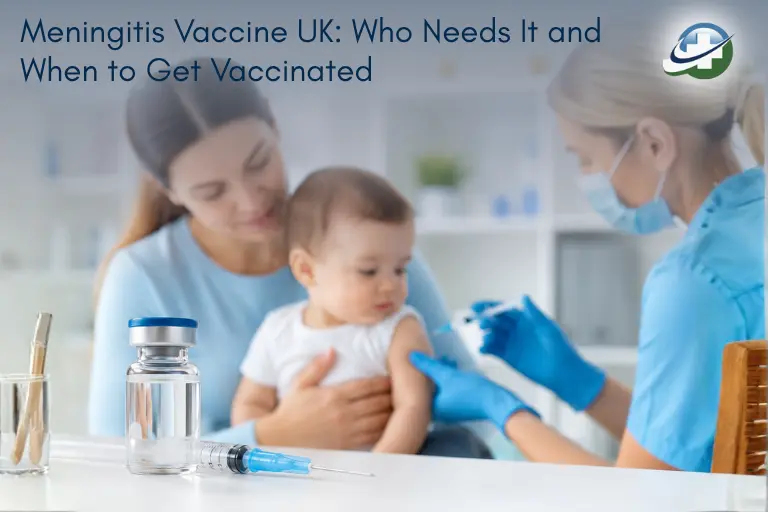
Meningitis can move from a mild headache to a life-threatening emergency within hours. That speed is exactly why the meningitis vaccine UK health authorities recommend has become such a central part of the national immunisation programme. Whether you’re a parent tracking your child’s jabs, a student heading off to university, or someone planning travel to a high-risk region, understanding your vaccination options matters.
This guide walks through everything you need to know about meningitis vaccination UK wide: who qualifies, when each dose is due, and how the different vaccine types compare. We’ll also cover practical steps you can take before and after your appointment, so you’re fully prepared.
What Is Meningitis and Why Vaccination Matters
Meningitis is an infection of the protective membranes surrounding the brain and spinal cord, known as the meninges. It can be caused by bacteria or viruses, though bacterial meningitis is generally the more dangerous form. Meningococcal bacteria, the group responsible for most serious UK cases, live harmlessly in the nose and throat of roughly one in ten people without causing symptoms. Occasionally, though, these bacteria break through and cause meningitis or septicaemia, a form of blood poisoning that can escalate into sepsis within hours.
Babies, young children, teenagers, and young adults living in close quarters, such as university halls, face the highest risk of infection. This is because meningococcal bacteria spread through prolonged close contact, including coughing, sneezing, and kissing.
Because bacterial meningitis can progress so quickly, prevention through vaccination is far more effective than treatment after symptoms appear. According to the NHS, the vaccine is offered to teenagers in school but remains available up to age 25 if missed — a detail that underscores why meningitis vaccine UK guidance is built into the routine childhood schedule and extended to specific higher-risk groups.
Types of Meningitis Vaccines Available in the UK
Several meningitis vaccines are used in the UK, each targeting different strains of meningococcal bacteria.
MenB vaccine protects against meningococcal group B, historically the most common cause of bacterial meningitis in young children in the UK. It’s offered to babies as part of the routine schedule.
MenACWY vaccine protects against four meningococcal strains, groups A, C, W, and Y. This is the vaccine most commonly associated with teenagers and university entry, since strains W and Y have become increasingly significant causes of severe disease in the UK over the past decade.
MenC vaccine was historically offered on its own but has largely been folded into the broader MenACWY programme, since ACWY offers wider protection with a similar safety profile.
Hib/MenC combined vaccine is given to infants as part of their booster schedule to extend protection.
It’s worth noting that no single vaccine covers every strain of meningococcal bacteria. Even fully vaccinated individuals should stay alert to meningitis symptoms and seek urgent medical attention if they appear.
Who Needs the Meningitis Vaccine UK Programme Covers
The meningitis vaccination UK schedule targets specific age groups and risk categories rather than applying a single blanket recommendation.
Infants and young children receive the MenB vaccine at set points in their first year, alongside Hib/MenC boosters, because babies are particularly vulnerable to invasive meningococcal disease.
Teenagers in school Years 9 and 10 are routinely offered the MenACWY vaccine. This age group carries meningococcal bacteria at higher rates than any other, often without symptoms, making them more likely to unknowingly spread infection.
New university students, including those who missed their school-based dose, are strongly advised to get MenACWY vaccination before term starts. Communal living environments like halls of residence create ideal conditions for bacterial spread.
Travellers heading to regions with higher meningococcal disease rates, including parts of sub-Saharan Africa’s “meningitis belt,” may need MenACWY vaccination as a travel health precaution. Some destinations, including Saudi Arabia for pilgrims attending Hajj or Umrah, legally require proof of MenACWY vaccination for visa approval.
People with certain health conditions, such as a missing or non-functioning spleen, or those with weakened immune systems, may be advised to get vaccinated regardless of age due to elevated risk.
If you fall into any of these categories and are unsure whether you’re up to date, a quick conversation with a pharmacist or GP can clarify your status.
Meningitis Vaccine UK Schedule: When to Get Vaccinated
Timing plays a significant role in how well vaccination protects you, particularly around life events like starting university or travelling abroad.
For infants, MenB and Hib/MenC doses are worked into the routine NHS childhood immunisation timetable during the first year of life, with a booster in the second year.
For teenagers, the school-based MenACWY programme typically runs during Years 9 or 10, though exact timing can vary by school and region.
For university-bound students, it’s best to get vaccinated at least two weeks before moving into halls or shared accommodation. This gives your immune system enough time to build protection before you’re in a higher-exposure environment. If you never received the vaccine at school, freshers’ week is not too late to catch up.
For travellers, aim to get vaccinated several weeks before departure wherever possible, particularly if travel to the meningitis belt or Hajj/Umrah pilgrimage is involved, since some certificates require the vaccination to have been administered within a specific window before travel.
If you’re uncertain which dose applies to your situation, checking directly with your provider is the safest route to confirming exact timing for your circumstances.
Comparison Table: MenACWY vs MenB vs MenC
| Feature | MenACWY | MenB | MenC (Hib/MenC) |
| Strains covered | A, C, W, Y | B | C |
| Primary age group | Teenagers, students, travellers | Infants | Infants |
| Delivery | Single injection | Part of infant schedule | Combined infant booster |
| Typical setting | School, university, travel clinic | Routine baby immunisations | Routine baby immunisations |
| Travel relevance | High (some countries require it) | Low | Low |
| Duration of protection | Generally several years; boosters may be advised for ongoing risk | Long-term with routine schedule | Long-term with routine schedule |
This table offers a general comparison. Individual recommendations can vary based on medical history, so always confirm specifics with a healthcare professional.
Benefits of Getting Vaccinated
Getting the meningitis vaccine UK health services recommend offers protection that extends well beyond the individual.
Reduced personal risk. Vaccination significantly lowers your chances of developing invasive meningococcal disease, which can cause permanent damage including hearing loss, limb amputation, or brain injury in severe cases.
Community protection. Because meningococcal bacteria spread through close contact, widespread vaccination reduces the overall circulation of these bacteria, indirectly protecting people who haven’t been vaccinated or who can’t be for medical reasons.
Peace of mind during high-risk periods. Starting university, travelling to unfamiliar regions, or simply living in shared accommodation all raise your exposure. Vaccination removes one significant variable from that equation.
Meeting entry requirements. For pilgrims and travellers to certain countries, vaccination isn’t optional. It’s a legal requirement for visa approval, and having documentation ready avoids last-minute travel disruption.
Long-term protection with minimal disruption. A single MenACWY injection provides broad protection against four strains, meaning one appointment can cover years of reduced risk.
Common Use Cases for Meningitis Vaccination
Starting secondary school or sixth form. Many teenagers receive their MenACWY dose through the school immunisation programme, often without needing to book anything separately.
Preparing for university. Freshers moving into halls of residence are a classic use case, given the higher transmission risk in shared living spaces.
Planning international travel. Anyone heading to the African meningitis belt, or countries with active outbreaks, should check current vaccination advice before departure.
Performing Hajj or Umrah. Saudi Arabian authorities require proof of MenACWY vaccination for all pilgrims, making this one of the most common reasons adults seek out the vaccine outside the routine school schedule.
Catching up on missed doses. Adults who never received MenACWY as teenagers, perhaps because they attended school abroad or missed the relevant year group, can still request the vaccine.
Best Practices Before and After Vaccination
Before your appointment, mention any allergies, current illnesses, or ongoing medical treatment to your pharmacist or nurse. If you have a minor cold or mild symptoms, it’s usually fine to proceed, but always flag anything more significant.
Wear clothing that gives easy access to your upper arm, since the injection is typically given there.
After vaccination, it’s sensible to stay nearby for a few minutes to make sure you feel well, even though serious reactions are rare. Mild side effects such as redness at the injection site, tiredness, or a slightly raised temperature can occur and typically resolve within a day or two.
Keep a record or certificate of your vaccination, particularly if it’s required for travel or visa documentation. Losing proof of vaccination can create unnecessary complications when applying for certain travel permits.
If you’re booking as part of travel preparation, try to schedule your appointment well ahead of your departure date rather than leaving it to the last week, since some vaccines need time to reach full effectiveness.
Common Mistakes to Avoid
Assuming one vaccine covers everything. MenACWY does not protect against MenB, and vice versa. Check exactly which strains you need coverage for based on your circumstances.
Leaving travel vaccination too late. Some certificates require the vaccine to have been given within a specific timeframe before departure. Booking at the last minute can mean you don’t meet entry requirements.
Ignoring symptoms after vaccination. While rare, it’s important to know the difference between normal mild side effects and signs that need medical attention. If you’re ever unsure, contact a healthcare professional.
Forgetting to keep documentation. For pilgrims and travellers, losing your vaccination certificate can delay or block visa approval. Keep both a physical and digital copy where possible.
Assuming teenagers automatically received their dose. School-based programmes don’t reach every student, particularly those who moved schools, were absent, or were educated outside the standard system. Don’t assume coverage without checking.
Delaying because symptoms of meningitis are being confused with other illnesses. Meningitis can look like flu in its early stages. Vaccination reduces risk, but ongoing symptom awareness remains essential regardless of vaccination status.
Frequently Asked Questions
1. Is the meningitis vaccine free on the NHS in the UK?
Routine meningitis vaccinations for eligible age groups, including infants and school-aged teenagers, are provided free through the NHS immunisation programme. Travel-related or catch-up vaccinations outside these groups may be available privately.
2. How many meningitis vaccines are there in the UK?
The UK uses several vaccines targeting different meningococcal strains, primarily MenB for infants and MenACWY for teenagers, students, and travellers. Each targets different bacterial groups, so they aren’t interchangeable.
3. Do university students need the meningitis vaccine even if they had it at school?
If you received your MenACWY dose during Year 9 or 10, you’re generally considered protected and don’t need a repeat dose before university, though it’s worth confirming with a healthcare provider if you’re unsure of your vaccination history.
4. Can adults get the meningitis vaccine if they missed it as a teenager?
Yes. Adults who didn’t receive MenACWY at school can still request the vaccine, particularly if they’re planning travel to higher-risk regions or attending events like Hajj or Umrah.
5. How long does meningitis vaccine protection last?
6. What are the side effects of the meningitis vaccine?
Most side effects are mild and short-lived, including soreness at the injection site, a mild temperature, headache, or tiredness. These typically resolve within a day or two. Serious allergic reactions are very rare.
7. Does the meningitis vaccine protect against all types of meningitis?
No single vaccine covers every meningitis-causing strain. MenACWY, for example, doesn’t protect against MenB. This is why symptom awareness remains important even after vaccination.
8. Where can I get the meningitis vaccine in the UK?
Meningitis vaccination is available through GP surgeries, school immunisation programmes, and many community pharmacies offering travel and private vaccination services.
Conclusion and Next Steps
Understanding who needs the meningitis vaccine UK health guidance recommends, and when to get it, comes down to a few key factors: age, upcoming life events like university, and travel plans. Bacterial meningitis develops fast, and the protection vaccination offers is one of the simplest, most effective steps you can take to reduce that risk for yourself and those around you.
If you’re heading to university, planning international travel, or simply unsure whether your vaccination history is up to date, don’t leave it to chance. The team at Chertsey Pharmacy can talk through your specific situation, check what protection you may already have, and help you get vaccinated with minimal fuss. Chertsey Pharmacy’s experienced team makes the process quick and straightforward, so you can focus on your studies, your trip, or simply your peace of mind. Book your appointment with Chertsey Pharmacy today and take the guesswork out of your meningitis protection.