
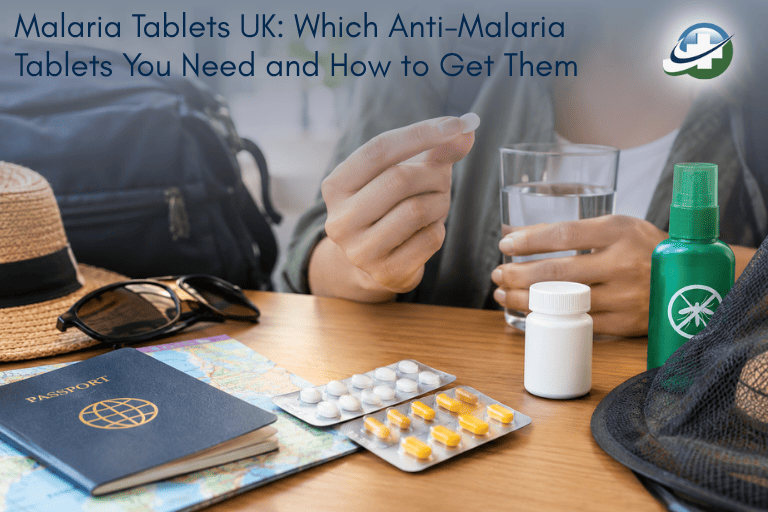
Planning a trip to a warm, tropical country? Before you pack, check whether you need anti malaria tablets. Malaria is a serious illness, and it is one of the few travel infections where a UK traveller can cut the risk sharply with a plan made well before departure. The catch is that there is no single answer. The right anti malaria tablets depend on where you are going, when you travel, how long you stay and your own health.
This guide explains who needs malaria tablets in the UK, how the main options compare, how to get them safely and which mistakes catch travellers out. At Chertsey Pharmacy, our travel clinic team answers these questions every week, so we have kept the advice practical and easy to act on.
Table of Contents
- What Is Malaria and Why Does It Matter for UK Travellers?
- Who Needs Anti Malaria Tablets?
- How Anti Malaria Tablets Work
- Comparing Malaria Prevention Tablets
- Is There an Anti Malaria Vaccine for Travellers?
- The Four-Step Protection Plan
- Benefits of Taking Anti Malaria Tablets Properly
- Use Cases: Which Traveller Are You?
- How to Get Anti Malaria Tablets in the UK
- Best Practices for Taking Anti Malaria Tablets
- Common Mistakes to Avoid With Anti Malaria Tablets
- Frequently Asked Questions
- Conclusion and Next Steps
What Is Malaria and Why Does It Matter for UK Travellers?
Malaria is caused by a parasite that infects red blood cells. It does not spread from person to person through normal contact. It is passed on by the bite of an infected female Anopheles mosquito. The UK has no malaria transmission, so almost every case seen here is brought home by someone who travelled abroad.
How Malaria Spreads
The mosquitoes that carry malaria bite mainly between dusk and dawn. Risk is highest in parts of sub-Saharan Africa, but malaria also occurs in areas of South Asia, Southeast Asia, Central and South America and the Pacific. Risk can change within a single country. A city, a high-altitude region and a rural lowland area can each carry a very different level of risk. That is why a blanket rule such as “I’m going to Africa, so I need tablets” does not work.
Symptoms to Watch For
Early malaria can look like flu: fever, chills, headache, muscle aches and tiredness. Symptoms usually appear within a few weeks of being bitten, but they can start months later. The most dangerous form can become life-threatening within days, so any fever after travel to a malaria area needs urgent medical attention, even if you took your tablets. The NHS malaria guide gives a clear overview of symptoms and when to seek help.
Who Needs Anti Malaria Tablets?
Not every traveller to a tropical country needs anti malaria tablets. Some destinations have little or no risk, and bite prevention alone is enough. Others carry a risk high enough that anti malaria tablets are strongly advised. The decision rests on four things: your destination, the season, the length and style of your trip, and your personal health.
Destinations Where Anti Malaria Tablets Are Often Advised
Travel health bodies in the UK publish country-by-country malaria maps and advice, and the TravelHealthPro service run by the National Travel Health Network and Centre is the reference most clinicians use. As a general guide, anti malaria tablets are commonly recommended for many parts of sub-Saharan Africa, some regions of South Asia and Southeast Asia, parts of Latin America and areas of Papua New Guinea. Risk also depends on the time of year, because rainy seasons usually bring more mosquitoes.
Travellers at Higher Risk Who Should Not Skip Anti Malaria Tablets
Some people face greater danger from malaria and should take extra care when planning:
- Pregnant women or those planning pregnancy, because malaria can cause serious problems for mother and baby.
- Young children, who can become very unwell quickly.
- People visiting friends and relatives in a country where they grew up. Natural immunity fades after a few years away, yet many of these travellers assume they are still protected.
- Older adults and people without a working spleen, who can have more severe illness.
- Long-stay and adventure travellers who spend many nights in rural areas.
How Anti Malaria Tablets Work
Anti malaria tablets do not stop a mosquito from biting you. They work inside your body. If an infected mosquito does bite, the medicine targets the parasite at an early stage so it cannot establish a full infection. Because of this, you usually need to start before you enter the risk area and carry on for a set period after you leave. Some types have to be taken daily, others weekly, and each has its own start and finish schedule.
No anti malaria tablet gives 100% protection. That is why doctors and pharmacists never rely on tablets alone. They are one layer in a wider plan, which we cover below.
Comparing Malaria Prevention Tablets
There are several kinds of malaria prevention tablets licensed for travellers in the UK. Your prescriber chooses between them. You do not pick from a menu. The table below shows the factors that guide the choice, so you can see why two people travelling to the same country may leave with different advice.
| Factor | What it means | Why it matters |
| Destination and local resistance | Malaria parasites in some regions no longer respond to certain tablets | The wrong choice can leave you under-protected |
| Trip length | A weekend trip and a six-month stay call for different plans | Some anti malaria tablets suit short trips better, others suit long stays |
| Your health history | Conditions affecting the kidneys, liver, mood or nervous system can rule certain options out | Safety comes before convenience |
| Other medicines | Some regular medicines interact with malaria tablets | Interactions can reduce protection or raise side effects |
| Pregnancy and age | Choices narrow for pregnancy, breastfeeding and young children | Only some options are suitable |
| Lead time before travel | Some schedules must begin well before departure | Last-minute bookings limit your choices |
| Daily or weekly routine | Some people cope better with a weekly schedule, others prefer daily | A plan you can follow is a plan that works |
Questions to Expect Before You Get Anti Malaria Tablets
Expect a short consultation covering your itinerary, your medical history, your current medicines, any past reactions to tablets and your travel dates. Answer as fully as you can. A detail that feels minor, such as a past mood problem or a regular prescription, can change which anti malaria tablets are safe for you.
Is There an Anti Malaria Vaccine for Travellers?
This is one of the most common questions we hear, and the honest answer is: not in the way most people hope. Researchers have developed malaria vaccines, and the World Health Organization now recommends them for young children living in parts of Africa where malaria spreads widely. These programmes are a major public health step.
An anti malaria vaccine of this kind is designed for children in high-transmission regions, and it gives partial protection rather than a full shield. It is not currently a replacement for anti malaria tablets for UK travellers. If you are heading abroad, you still need a plan built around tablets where advised, bite prevention and quick medical help if you fall ill.
What you can do is protect yourself against other travel infections at the same appointment. Depending on your route, these may include hepatitis A, typhoid and other vaccines. You can check how many doses each course needs on our travel vaccines and doses page.
The Four-Step Protection Plan
UK travel health guidance uses a simple framework, often called the ABCD approach. Anti malaria tablets are only the third letter.
| Step | What it involves | Limit to remember |
| Awareness of risk | Check your destination, season and itinerary before you book | Risk changes by region, so general advice is not enough |
| Bite prevention | Repellent, long sleeves at dusk, treated bed nets, screened rooms | Nothing stops every bite |
| Chemoprevention (tablets) | Take the right anti malaria tablets exactly as directed | No tablet is 100% effective |
| Diagnosis without delay | Seek urgent care for any fever during or after travel | Delay raises the risk of severe illness |
Think of it as four locks on one door, with anti malaria tablets as the lock people most often forget to renew. Anti malaria tablets are strong, but the door is safest when all four are in place.
Benefits of Taking Anti Malaria Tablets Properly
The value of anti malaria tablets is easy to underestimate until you see what an infection can do. Taking the right anti malaria tablets, correctly, brings real advantages:
- Much lower risk of infection. Used with bite prevention, anti malaria tablets cut the chance of falling ill by a large margin.
- Protection against the most dangerous form. In high-risk regions, this is the form that can become life-threatening within days.
- A smoother trip. Malaria that develops overseas can end a holiday, a work trip or a gap year, and it often means an emergency hospital stay.
- Peace of mind for families. Parents travelling with children, and relatives back home, worry less when a clear plan is in place.
- Fewer problems after you return. Because malaria can appear weeks after travel, protection that continues after you leave the risk area matters.
Use Cases: Which Traveller Are You?
The Family on a Safari Holiday
A family heading to a wildlife reserve usually travels to a defined, higher-risk area for a short time, and often needs anti malaria tablets. Children’s suitability is checked carefully, and the family gets a clear schedule to follow together.
The Backpacker Crossing Several Countries
Multi-country trips are tricky because risk changes at every border. A backpacker needs one plan that covers all the stops, ideally with a start date set well before the first flight.
The Business Traveller on a Short Trip
A three-day work trip can still carry risk. Short trips often mean tight lead times, so booking early keeps more options open.
Someone Visiting Family Abroad
If you grew up in a malaria region and now live in the UK, do not rely on old immunity. This group is at higher risk of imported malaria, and anti malaria tablets are often advised.
Someone Who Is Pregnant or Breastfeeding
Travel to a malaria area is generally discouraged in pregnancy unless essential. If it cannot be avoided, specialist advice is needed before any decision is made.
How to Get Anti Malaria Tablets in the UK
Many people searching for malaria tablets UK, or for anti malaria tablets near them, wonder if they need a GP visit. In most cases you do not. Anti malaria tablets for travel are normally supplied privately after a travel health consultation, rather than on an NHS prescription, and a qualified pharmacist or prescriber can assess you and supply them. Here is the usual route:
- Check your destination early. Look up your country and regions on TravelHealthPro, and note your dates, route and the type of accommodation you will use.
- Book a travel health consultation. Aim for six to eight weeks before departure. Some schedules need an early start, and other vaccines may need several doses.
- Complete a health check. Your clinician reviews your history, medicines and plans.
- Receive your supply and instructions. You should leave knowing exactly when to start, when to continue and when to stop.
- Follow the schedule and stay alert. Keep your tablets with you, set reminders and report any fever after travel.
When you book with Chertsey Pharmacy, you can cover your malaria advice and your other travel vaccines in one visit, which saves time before you fly. Our travel clinic services page lists what we offer. If your route includes areas where other mosquito-borne infections circulate, you can also read our guides to the dengue vaccine and the chikungunya vaccine.
A Word on Buying Online
Be careful with sellers who do not ask about your health or trip. Counterfeit and unsuitable anti malaria tablets are a known risk. Always use a pharmacy registered with the General Pharmaceutical Council, and be wary of any site that supplies malaria prevention tablets without a consultation.
Best Practices for Taking Anti Malaria Tablets
Small habits make anti malaria tablets far more effective.
- Start anti malaria tablets on time. Begin on the date your clinician gives you, even if it feels early.
- Keep taking anti malaria tablets after you return. Finishing the full course is as important as starting it.
- Link it to a habit. Take your anti malaria tablets with a meal or at a set time, and use a phone reminder.
- Take them with food or water as advised. This can reduce stomach upset.
- Pack extra anti malaria tablets. Carry enough for delays, and keep them in hand luggage.
- Use bite prevention every day. Apply an effective insect repellent, wear covered clothing at dusk and sleep under a treated net where provided.
- Tell any doctor you see about your travel. Mention it if you feel unwell for up to a year afterwards.
Common Mistakes to Avoid With Anti Malaria Tablets
- Assuming one plan fits every country. Risk and resistance patterns differ by region.
- Booking too late. Leaving it to the week before flying can narrow your choices.
- Stopping when you leave the risk area. The after-travel part of the schedule is not optional.
- Skipping doses and doubling up. If you miss a dose, ask your pharmacist what to do rather than guessing.
- Relying on anti malaria tablets alone. Bites still matter, even with good protection.
- Ignoring a fever after you come home. A fever after travel to a malaria area is an emergency until proven otherwise.
- Using leftover anti malaria tablets from an old trip. What suited one journey may not suit the next.
- Buying anti malaria tablets from unverified websites. Safety checks exist for a reason.
Frequently Asked Questions
1. Do I need anti malaria tablets for every trip abroad?
No. You only need anti malaria tablets for destinations with a meaningful malaria risk, and even then it depends on the region and season. Many countries have no risk at all. A travel health consultation will tell you whether your route calls for tablets.
2. Which anti malaria tablets are best?
There is no single best option. The right choice depends on your destination, health, other medicines, age and the length of your trip. A pharmacist or prescriber will recommend the most suitable type for you.
3. When should I start taking malaria prevention tablets?
Start your anti malaria tablets before you enter a malaria area, on the date your clinician gives you. Start times vary by tablet type, which is another reason to book a consultation six to eight weeks before you travel.
4. Can I get malaria tablets in the UK without seeing a GP?
Yes. Many travellers get anti malaria tablets through a pharmacy travel clinic after a consultation. This is normally a private service rather than an NHS prescription.
5. Is there an anti malaria vaccine I can have before travelling?
Not at present for UK travellers. Malaria vaccines recommended by the World Health Organization are aimed at young children in parts of Africa where malaria is common. Travellers still rely on tablets where advised, bite prevention and prompt medical care.
6. How long do I need to take malaria tablets after I come home?
It depends on which anti malaria tablets you are prescribed, so follow the schedule you are given. Stopping early can leave you unprotected during the period when infection can still develop.
7. Can children and pregnant women take anti malaria tablets?
Some anti malaria tablets suit children and some are suitable in pregnancy, but choices are limited and need professional advice. Anyone travelling with a child or while pregnant should arrange a consultation well in advance.
8. What should I do if I feel ill after travelling?
Seek urgent medical help and tell the clinician where you travelled, when and what protection you used. Do not wait to see if it passes, because malaria can worsen quickly.
Conclusion and Next Steps
Choosing the right anti malaria tablets comes down to one question: what does your trip actually involve? Where you go, when, for how long and your own health all shape the answer. Tablets work best alongside bite prevention, a clear schedule and fast action if you feel unwell. An anti malaria vaccine is not yet an option for UK travellers, so planning early and getting tailored advice is your best protection.
If you are travelling soon, do not leave it to chance. Chertsey Pharmacy offers friendly travel health advice and can help you get the right anti malaria tablets along with any other travel vaccines you need. Book your travel appointment today or call us on 01932 976 346, and head off knowing you are protected.
Medical disclaimer: This article is for general information and does not replace personal medical advice. Always speak to a pharmacist, doctor or travel health clinician about your own situation.