
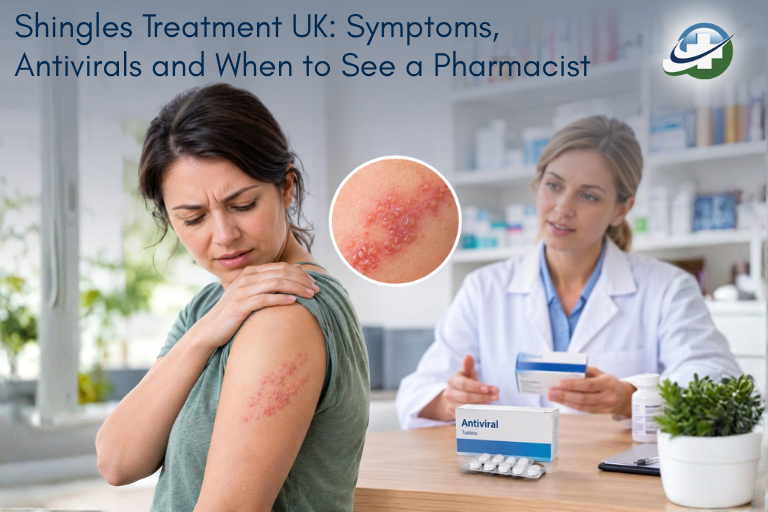
If you have a painful rash on one side of your body, you are probably asking whether it is shingles and what shingles treatment UK services can do for you. The short answer is that early treatment makes a real difference. Starting antiviral treatment quickly can shorten the illness and reduce the risk of long-lasting nerve pain. This guide explains what shingles is, how to recognise the rash, which treatment options are available in the UK, and when a pharmacist is the right first stop. Our team at Chertsey Pharmacy regularly helps people with this exact question, so the advice below is practical and easy to act on.
Table of Contents
- What Is Shingles?
- Shingles Symptoms: How to Recognise the Rash
- Shingles Treatment UK: Your Options
- Why Timing Matters: The 72-Hour Window
- Benefits of Seeing a Pharmacist Early
- Use Cases: Who Should Get Checked Quickly
- Best Practices for Managing Shingles at Home
- Common Mistakes to Avoid
- Shingles Prevention: The Vaccine
- Frequently Asked Questions
- Final Thoughts
What Is Shingles?
Shingles is a viral infection caused by the varicella-zoster virus, the same virus that causes chickenpox. After you recover from chickenpox, the virus does not leave your body. It stays dormant in nerve tissue, usually near the spine. Years later, the virus can reactivate and travel along a nerve to the skin, producing a painful rash.
Anyone who has had chickenpox can develop shingles, but the risk rises with age. It becomes more common after the age of 50, and it is also more likely in people whose immune system is weakened by illness or treatment. Stress and a run-down body can play a part too, although doctors do not fully understand every trigger.
The condition is rarely dangerous for healthy adults, but it can be very uncomfortable. The biggest concern is postherpetic neuralgia, a form of nerve pain that can continue for months after the rash has healed. This is the main reason early shingles treatment matters.
Shingles Symptoms: How to Recognise the Rash
Shingles usually starts with pain, not a rash. Many people describe a burning, tingling, or stabbing feeling on one side of the body, often on the chest, back, or face. The pain can appear several days before anything is visible on the skin.
A rash then develops in the same area. Shingles typically follows the path of a single nerve, which is why the rash forms a band or strip. The key feature is that it stays on one side of the body. If you have a rash on both sides, it is unlikely to be shingles.
Over the next few days, the rash turns into small fluid-filled blisters. These may itch, ooze, and then crust over. New blisters can keep appearing for up to a week. Most rashes take two to four weeks to fully heal, though the skin can look marked for longer.
How Shingles Differs From Other Rashes
Several common skin problems look similar at first. The table below shows the main differences.
| Feature | Shingles | Cold Sore | Insect Bite |
| Location | Band on one side of the body or face | Usually around the lips or nose | Random spots on exposed skin |
| Early warning | Pain, burning, or tingling before the rash | Tingling or itching before blisters | Itch straight away |
| Pattern | Grouped blisters in a strip | Small clusters that crust over | Single raised bumps |
| Pain level | Often significant, sometimes severe | Mild to moderate | Usually mild |
| Typical healing | Two to four weeks | About one to two weeks | A few days |
If you are unsure, a pharmacist can examine the rash in a private consultation and help you work out what it is.
Shingles Treatment UK: Your Options
Treatment for shingles has two main goals. The first is to slow the virus so the illness is shorter and less severe. The second is to manage pain and protect the skin while it heals.
Antiviral Treatment
Antiviral tablets are the main medical treatment for shingles. They work best when started early, ideally within 72 hours of the rash appearing. In the UK, a pharmacist can assess whether antiviral treatment is suitable for you. Eligibility depends on factors such as your age, the extent of the rash, your general health, and the medicines you already take.
Some people cannot take antivirals or need a different approach. For example, people with complex medical histories may need a GP review before any treatment decision is made. A good pharmacist will tell you if this is the case.
Pain Relief and Self-Care
Pain is often the hardest part of shingles. Your pharmacist can recommend suitable pain relief based on your health history. Alongside medicines, simple self-care helps:
- Wear loose, natural-fibre clothing so the rash is not rubbed.
- Apply cool, damp cloths to the area for short periods.
- Keep the rash clean and dry, and avoid scratching the blisters.
- Rest and drink plenty of fluids while your body fights the virus.
Should I See a Pharmacist or a GP?
For many people with a typical shingles rash, a pharmacy consultation is the quickest route to treatment. The table below gives a general guide, but it is not a substitute for medical advice.
| Situation | Best First Step |
| Typical rash on the body, no eye or face involvement, not very unwell | Pharmacy consultation |
| Rash on the face, near the eye, or on the tip of the nose | Urgent GP appointment or NHS 111 |
| Weakened immune system, very severe pain, or a spreading rash | Contact your GP urgently or NHS 111 |
| Confusion, difficulty breathing, high fever, or feeling extremely unwell | Call 999 or go to A&E |
Shingles near the eye can affect vision and needs same-day medical attention. Do not wait for a pharmacy appointment in that case.
Why Timing Matters: The 72-Hour Window
The effectiveness of shingles treatment depends heavily on timing. When antiviral treatment starts within the first 72 hours of the rash, it can reduce how severe the infection becomes and how long the nerve pain lasts. After that window, the benefit becomes smaller.
Many people wait because they assume the rash will settle by itself, or they are unsure whether it is shingles at all. A short consultation can settle that question. If the rash is not shingles, you will know quickly. If it is, you will have started the fastest route to relief.
Benefits of Seeing a Pharmacist Early
Choosing a pharmacist for shingles care offers several practical advantages:
- Speed. Many pharmacies offer appointments without a long wait, which matters when the treatment window is short.
- Privacy. The consultation is confidential, and you can ask questions without feeling rushed.
- Assessment. A pharmacist can examine the rash, check your medical history, and review the medicines you take.
- Referral when needed. If your condition needs further investigation, the pharmacist can refer you to your GP.
- Convenience. You do not need to sit in a waiting room for a routine question about a rash.
At Chertsey Pharmacy, our pharmacists take the time to explain your options so you know what to expect at each stage of recovery.
Use Cases: Who Should Get Checked Quickly
Some people should seek advice as soon as they notice a suspicious rash. These include:
- Adults over 50, who have a higher risk of shingles and its complications.
- People with a weakened immune system, including those undergoing certain treatments or living with long-term conditions.
- Anyone with severe pain that is out of proportion to the rash.
- People with a rash near the eyes or face, who need urgent assessment.
- Parents and carers who want to check whether a child’s or elderly relative’s rash needs attention.
Pregnant women and people with a newborn should also speak to a healthcare professional promptly if they think they have shingles, because the virus can be more concerning in these situations.
Best Practices for Managing Shingles at Home
Once you have been assessed, these habits can help your recovery:
- Follow the treatment plan exactly. If you have been prescribed medicines, take them at the times your pharmacist or doctor explained.
- Protect the rash. Keep it covered with a loose dressing or cloth so it does not rub against clothing.
- Manage your sleep. Pain often gets worse at night, so use a loose pillow and keep your bedding clean.
- Watch for warning signs. Contact a healthcare professional if the rash spreads, becomes infected, or your pain gets worse.
- Keep a simple record. Note when the pain started, when the rash appeared, and any treatments you have used. This helps your pharmacist or GP if you need further advice.
Common Mistakes to Avoid
Many people make small errors that slow their recovery. Watch out for these:
- Waiting too long to get help. The 72-hour window is short, and delay is the most common reason treatment is less effective.
- Assuming any rash is shingles. Check the pattern and the one-sided nature of the rash before deciding. A pharmacist can confirm this.
- Popping or scratching the blisters. This raises the risk of a skin infection and can leave lasting marks.
- Using leftover medicines. Medicines prescribed for someone else, or old supplies, may not be suitable for you.
- Ignoring pain that persists. If nerve pain continues well after the rash has healed, go back to a healthcare professional.
- Using the wrong treatment for a cold sore or insect bite. Creams for one condition may not help another, so get the diagnosis right first.
If you are not sure where to start, our walk-in services can help you get seen without delay.
Shingles Prevention: The Vaccine
Treatment deals with the infection once it has started, but prevention is the better goal. The shingles vaccine lowers your risk of developing shingles and reduces the chance of serious nerve pain if you do get it. Vaccination is available through the NHS for people who meet the eligibility criteria, which are based on age and health and are updated from time to time. Private options are also available, and you can learn more about our shingles vaccination service.
If you have never had chickenpox, the chickenpox vaccine is another useful topic to discuss with a pharmacist, particularly if you have close contact with someone who is at higher risk.
For up-to-date NHS guidance on symptoms, eligibility, and when to seek help, the NHS shingles page is a reliable place to start.
Frequently Asked Questions
How quickly should I see a pharmacist for shingles?
Ideally, see a pharmacist as soon as you notice a painful rash or unusual pain on one side of your body. Antiviral treatment works best when started within 72 hours of the rash appearing. Do not wait for the rash to get worse before getting advice.
Can I get shingles treatment from a pharmacy in the UK without a GP appointment?
In many cases, yes. A pharmacist can assess your rash, review your medical history, and decide whether prescription treatment is suitable. If your situation is more complicated, the pharmacist will refer you to your GP for further care.
Is shingles contagious?
You cannot catch shingles directly from another person. However, fluid from an open shingles blister can pass the varicella-zoster virus to someone who has never had chickenpox, and that person may then develop chickenpox. Cover the rash with a loose dressing and avoid close contact with pregnant women, newborn babies, and people with weakened immune systems until the blisters have crusted over.
Why is shingles pain so intense?
Shingles affects the nerves, so the pain can feel like burning, stabbing, or aching. It can be severe even when the rash looks mild. Cool, damp cloths and loose clothing can help, and a pharmacist can recommend suitable pain relief based on your health.
Will shingles come back?
Most people only get shingles once, but it can recur, particularly in people with weakened immune systems or those over 50. The shingles vaccine lowers this risk, so ask a pharmacist whether vaccination is right for you.
Final Thoughts
Shingles is painful, but it does not have to be a long ordeal. The most important step is acting early. If you notice pain or a rash on one side of your body, get it checked within the first few days. Antiviral treatment, good self-care, and prompt advice from a pharmacist can make a noticeable difference to how quickly you recover and how much pain you feel along the way.
If you think you have shingles, do not wait for the pain to get worse. Book an appointment with Chertsey Pharmacy today, or call us to speak to a member of our team. Our pharmacists will assess your rash, explain your options clearly, and help you get back to your normal routine as soon as possible.