
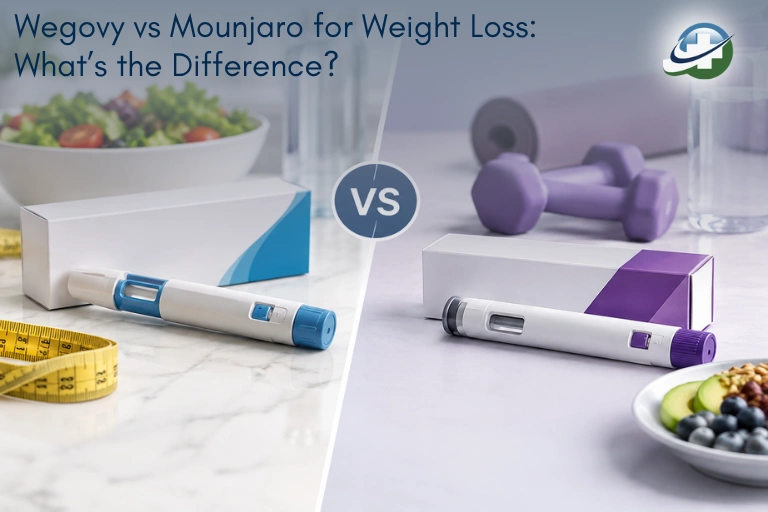
If you’ve been researching Wegovy vs Mounjaro UK, you’ve probably noticed that both names come up constantly in conversations about weight loss injections, yet the two medicines are not interchangeable. They work through different mechanisms, produce different average results in clinical trials, and are accessed differently depending on whether you go through the NHS or a private route. This guide breaks down exactly how Wegovy and Mounjaro compare, so you can have an informed conversation with a healthcare professional before deciding what’s right for you.
Weight loss injections have become one of the most talked about developments in obesity treatment in years. But talking about them accurately matters. Misinformation spreads quickly online, and the stakes are real: these are prescription-only medicines with genuine risks and benefits that depend on your individual health profile. This article sticks to what’s clinically documented and publicly confirmed, without exaggerating outcomes or glossing over the parts that require medical supervision.
Table of Contents
- What Are Wegovy and Mounjaro?
- Wegovy vs Mounjaro: Quick Comparison Table
- How Do They Actually Work?
- Wegovy vs Mounjaro for Weight Loss: Effectiveness
- Getting Weight Loss Injections UK: NHS vs Private
- Benefits of Medically Supervised Weight Loss Treatment
- Who Might Consider These Treatments? (Use Cases)
- Best Practices When Starting Treatment
- Common Mistakes to Avoid
- Safety and Side Effects
- FAQs
- Final Thoughts and Next Steps
What Are Wegovy and Mounjaro?
Wegovy (Semaglutide)
Wegovy is the brand name for semaglutide, manufactured by Novo Nordisk. It belongs to a class of medicines called GLP-1 receptor agonists, which mimic a naturally occurring gut hormone that regulates appetite and blood sugar. Wegovy is delivered as a once-weekly injection using a pre-filled pen, with doses that gradually increase from 0.25 mg up to a maintenance dose of 2.4 mg. It’s licensed in the UK for weight management in adults with obesity or excess weight combined with a weight-related health condition, and it’s also approved specifically to reduce cardiovascular risk in people with existing heart disease who are living with excess weight.
Mounjaro (Tirzepatide)
Mounjaro is the brand name for tirzepatide, made by Eli Lilly. It’s also a weekly injection, but it works on two hormone pathways instead of one: it’s a dual GIP and GLP-1 receptor agonist. That dual action is often cited as the reason Mounjaro has shown stronger average weight loss results in trials compared with single-action GLP-1 medicines. Like Wegovy, it’s prescription-only and requires a gradual dose titration under medical supervision.
Both medicines are part of a wider group of weight management treatments, and neither is designed to be used in isolation. They’re intended to work alongside dietary changes, physical activity, and behavioural support, which is why reputable providers pair the prescription with structured lifestyle guidance. The Weight Loss Clinic at Chertsey Pharmacy takes exactly this approach, treating the injection as one part of a wider, doctor-guided plan rather than a standalone fix.
Wegovy vs Mounjaro: Quick Comparison Table
| Feature | Wegovy | Mounjaro |
| Active ingredient | Semaglutide | Tirzepatide |
| Manufacturer | Novo Nordisk | Eli Lilly |
| Mechanism | GLP-1 receptor agonist | Dual GIP/GLP-1 receptor agonist |
| Dosing frequency | Once weekly | Once weekly |
| Average weight loss in trials | Around 14.9% at the 2.4 mg dose (STEP 1 trial) | Around 22.5% at the highest dose (SURMOUNT-1 trial) |
| NHS access | Specialist weight management services only; GPs cannot prescribe directly | Phased rollout; some GPs can now prescribe under updated guidance |
| Typical NHS eligibility | BMI of 35+ with a weight-related condition (or lower in some ethnic groups per NICE) | Similar BMI-based criteria, assessed by a clinician |
| Private access | Available via registered pharmacies and clinics after consultation | Available via registered pharmacies and clinics after consultation |
Trial results reflect average outcomes under study conditions and do not predict individual results.
How Do They Actually Work?
Both medicines act on hormone systems that regulate hunger and fullness, which is why they’re sometimes grouped together loosely as “appetite hormone” treatments. Semaglutide, the active ingredient in Wegovy, mimics GLP-1, a hormone released after eating that slows stomach emptying, increases feelings of fullness, and reduces the urge to eat, particularly high-fat foods. Tirzepatide, the active ingredient in Mounjaro, does the same thing through the GLP-1 pathway but adds a second hormone target, GIP, which appears to enhance the effect on appetite regulation and insulin sensitivity.
Neither medicine works by blocking fat absorption or burning calories directly. The weight loss comes from eating less as a result of reduced appetite and slower digestion, combined with the lifestyle changes a person makes alongside treatment. This is an important distinction when comparing Wegovy vs Mounjaro for weight loss, because it explains why results vary so much between individuals: the medicine changes how hungry you feel, but what you do with that reduced appetite still matters.
Wegovy vs Mounjaro for Weight Loss: Effectiveness
In head-to-head style trial data, Mounjaro has generally shown a stronger average effect. The SURMOUNT-1 trial recorded average weight loss of around 22.5% at the highest dose over roughly 72 weeks, compared with around 14.9% for Wegovy at its top dose in the STEP 1 trial. These figures come from separate clinical trials rather than a single direct comparison, so they should be read as an indication of typical outcomes rather than a guarantee either medicine will perform identically for every person.
It’s also worth noting that Wegovy holds a specific licence for reducing cardiovascular risk in people with established heart disease and excess weight, a distinction that isn’t just about the number on the scale. For someone whose main concern is heart health alongside weight, that licensed indication can be a relevant factor in the conversation with a prescriber. If you want to go deeper into how NHS pharmacy services handle conditions like this alongside weight management, our blog covers related health topics in more detail.
Getting Weight Loss Injections UK: NHS vs Private
Access to weight loss injections UK wide is more complicated than simply asking your GP for a prescription. On the NHS, Wegovy is currently only available through specialist Tier 3 weight management services, and GPs are not able to prescribe it directly. You’d usually need a referral, an assessment against NICE’s eligibility criteria (broadly a BMI of 35 or above with a weight-related condition, with some flexibility for certain ethnic groups), and be prepared for the fact that waiting times vary significantly by area. You can see the fuller range of what’s covered through NHS services at Chertsey Pharmacy, from contraception to Pharmacy First treatments.
Mounjaro’s NHS pathway has been evolving, with some GP practices now able to prescribe it under updated guidance, though this rollout is phased and not available everywhere yet. Local Integrated Care Board policies determine what’s available in a given area, so provision is genuinely inconsistent across the country.
For people who don’t meet NHS criteria, or who are facing a long wait, private prescribing through a registered pharmacy is the other route. This is where Mounjaro weight loss UK searches and Wegovy weight loss UK searches often lead people, because private clinics typically apply a broader eligibility threshold (often from a BMI of 27 with a related condition, or 30 without one) and can start treatment more quickly, provided a proper clinical assessment takes place first.
Benefits of Medically Supervised Weight Loss Treatment
- Structured accountability. Regular check-ins with a clinician mean dose adjustments and side effects are monitored properly, rather than managed alone.
- Reduced risk of drug interactions. A proper review of your current medications before starting treatment lowers the chance of an unsafe combination.
- Support beyond the injection. The most effective programmes pair medication with nutrition and lifestyle guidance, addressing habits that outlast the prescription itself.
- Access without long NHS waits. Private routes, when run by a registered pharmacy offering private services alongside NHS care, can shorten the time between deciding to act and actually starting a monitored programme.
- Ongoing safety monitoring. Weight, blood pressure, and general health can be tracked over time, which matters given these are medicines used over many months.
Who Might Consider These Treatments? (Use Cases)
Weight loss injections aren’t a fit for everyone, and no reputable provider should suggest otherwise. They tend to be considered for adults who have a BMI that places them in the overweight or obese category, particularly where that’s linked to conditions like type 2 diabetes, high blood pressure, or joint strain, and who have already tried diet and lifestyle changes without achieving lasting results. They may also be relevant for people whose GP or specialist has flagged weight as a factor in a broader health risk, such as cardiovascular disease.
They are not intended for people seeking modest, short-term aesthetic weight loss, for anyone who is pregnant or trying to conceive, or for those with a personal or family history of certain thyroid conditions. This is precisely why a proper consultation, not a quick online form, needs to sit at the start of the process. It’s worth noting that a weight loss prescription is a separate pathway from Chertsey Pharmacy’s walk-in services, which cover everyday pharmacy needs rather than structured treatment programmes like this one.
Best Practices When Starting Treatment
- Get a full health review first. Blood pressure, current medications, and relevant medical history should all be checked before a prescription is issued.
- Start low and titrate slowly. Both medicines are designed to be introduced at a low dose and increased gradually, which reduces the likelihood of significant side effects.
- Pair the injection with dietary support. Protein intake, portion awareness, and hydration all affect how well the treatment is tolerated and how sustainable results are.
- Keep appointments consistent. Weekly injections work best when taken on the same day each week, and follow-up reviews should not be skipped.
- Track progress honestly. Noting energy levels, appetite changes, and any side effects gives your prescriber the information they need to adjust your plan safely. If anything feels off between appointments, it’s always better to contact us directly rather than wait.
Common Mistakes to Avoid
- Sourcing medication from unverified sellers. Counterfeit or unregulated injectable products have circulated online, and using them carries serious health risks. Only use a registered UK pharmacy.
- Skipping the consultation stage. Self-diagnosing suitability without a clinical assessment increases the risk of using a medicine that isn’t appropriate for your health profile.
- Expecting the injection to do all the work. Without any change to diet or activity, results are typically far more limited and harder to maintain.
- Increasing the dose without guidance. Titration schedules exist for a reason, and self-adjusting doses can significantly increase the risk of side effects.
- Stopping abruptly without a plan. Weight regain is common when treatment stops suddenly without a maintenance strategy in place.
Safety and Side Effects
Both Wegovy and Mounjaro can cause gastrointestinal side effects, most commonly nausea, diarrhoea, constipation, or vomiting, particularly during dose increases. These effects tend to be more noticeable early in treatment and often ease over time. As with any prescription medicine, there are more serious but less common risks that a prescriber will discuss during your consultation, along with any relevant contraindications based on your medical history.
This article is intended for general information only and is not a substitute for individual medical advice. If you’re considering either treatment, a full assessment by a registered pharmacist or doctor is essential before starting.
FAQs
What is the main difference between Wegovy and Mounjaro?
Wegovy (semaglutide) targets one appetite hormone pathway, while Mounjaro (tirzepatide) targets two, which is why Mounjaro has generally shown higher average weight loss in separate clinical trials.
Is Mounjaro more effective than Wegovy for weight loss?
Trial data suggests Mounjaro produces higher average weight loss than Wegovy, but individual results vary and effectiveness depends on adherence, diet, and personal health factors.
Can I get Wegovy or Mounjaro on the NHS?
Wegovy is available only through specialist NHS weight management services, not directly from a GP. Mounjaro access is expanding through some GP practices under a phased rollout, though availability differs by area.
Do I need a GP referral to get weight loss injections privately?
No. Registered pharmacies offering a weight loss service can carry out their own clinical screening and consultation without requiring a GP referral first.
Are weight loss injections safe?
When prescribed after a proper clinical assessment and used under medical supervision, both medicines are regulated, licensed treatments. Safety depends heavily on correct screening, dose titration, and ongoing monitoring.
How long do you need to use Wegovy or Mounjaro?
Treatment duration is individual and depends on response, tolerability, and clinical goals. A prescriber will typically review progress at set intervals and adjust the plan accordingly.
Final Thoughts and Next Steps
Choosing between Wegovy and Mounjaro isn’t really about picking the “better” drug in the abstract. It’s about which medicine suits your health profile, your goals, and how your body responds, and that’s a decision that belongs in a proper clinical consultation rather than a search engine. What the data does make clear is that both are legitimate, regulated treatments when accessed correctly, and both work best as part of a wider plan rather than a standalone fix.
If you’re weighing up Wegovy vs Mounjaro UK options and want a straightforward, judgement-free conversation about what’s realistic for you, book a consultation with the team at Chertsey Pharmacy. Every weight loss plan should start with a real conversation, not a guess.
Source referenced: British Heart Foundation, “Wegovy: what to know about the weight-loss injection”