
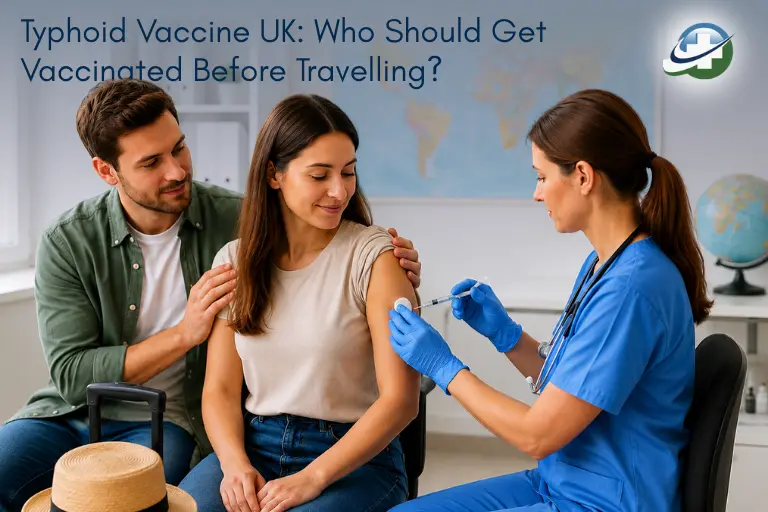
What Is Typhoid Fever and Why It Matters for Travellers
Typhoid fever is a bacterial infection spread mainly through contaminated food and water. It thrives in regions where sanitation infrastructure is limited, and it remains a genuine risk for anyone travelling to South Asia, parts of Africa, Central and South America, and Southeast Asia. According to NHS guidance on typhoid fever, untreated typhoid can lead to serious complications such as internal bleeding or an infection in the lining of the abdomen.
This is exactly why the typhoid vaccine UK health services recommend has become a standard part of pre-travel planning. It is not a vaccine everyone in the UK needs as part of routine immunisation, but for a specific and fairly large group of travellers, it is one of the most important precautions to take before departure. If you are booking flights to a typhoid-endemic country in the coming months, understanding who needs this vaccine, and when to get it, could save you from a miserable and potentially dangerous illness abroad.
What Is the Typhoid Vaccine UK Travellers Are Advised to Get
The vaccine works by helping your immune system recognise and fight off the bacteria responsible for typhoid fever before it can take hold. It does not eliminate all risk on its own, which is why it is always paired with sensible food and water precautions while travelling, but it significantly reduces both the likelihood of infection and the severity of illness if exposure does occur.
There are different formulations available in the UK, including newer conjugate-based options that offer longer protection and can be given to younger travellers, and older-style injections that have been used for decades. The right choice depends on your age, travel history, destination, and how soon you are due to depart. Rather than guessing which one applies to you, it is worth having a proper consultation, since dosing schedules and suitability vary from person to person. You can review the specific dosing information on the typhoid vaccine page before your appointment so you arrive with a clear idea of what to expect.
Who Actually Needs a Typhoid Vaccine Before Travelling?
Not every trip abroad calls for typhoid protection. The decision comes down to where you are going, how long you will be there, and how you plan to travel once you arrive. Generally, vaccination is recommended for:
- Travellers heading to South Asia, particularly India, Pakistan, Bangladesh, and Nepal, where typhoid remains relatively common
- Backpackers and long-stay travellers who will be eating street food, staying in budget accommodation, or travelling off the beaten path
- People visiting friends and relatives (VFR travellers), who statistically face higher risk because they often stay longer and eat more like locals than typical tourists
- Aid workers, volunteers, and those on humanitarian placements in areas with limited sanitation
- Anyone with a compromised immune system travelling to a moderate or high-risk region, who should seek tailored medical advice
- Families travelling with children to endemic areas, since children can be more vulnerable to severe illness
If you fall into a lower-risk category, such as a short business trip to a major city with reliable food and water standards, your risk may still be worth discussing, but it will not automatically mean vaccination is essential. This is precisely why a proper consultation at a travel clinic matters more than trying to self-diagnose your risk level from a blog post or forum thread.
Typhoid Vaccine for Travel: Destination Risk at a Glance
The table below gives a general sense of where typhoid risk tends to be higher, though individual circumstances always shape the final recommendation.
| Destination Region | Typical Typhoid Risk | Vaccination Generally Advised | Common Additional Precautions |
| South Asia (India, Pakistan, Bangladesh, Nepal) | High | Yes | Bottled water, avoid street food, hand hygiene |
| Sub-Saharan Africa | Moderate to High | Yes | Food and water caution, malaria prevention often needed too |
| Southeast Asia (Cambodia, Laos, parts of Vietnam) | Moderate | Usually yes | Careful food selection, avoid raw produce |
| Central and South America | Moderate | Often recommended | Bottled water, caution with market food |
| Western Europe, North America, Australia | Low | Rarely required | Standard hygiene practices |
| Short business trips to major Asian cities | Low to Moderate | Case by case | Depends on itinerary and accommodation standard |
This table is a general guide rather than a personal risk assessment. Your specific itinerary, planned activities, and medical history will always shape the final recommendation given during a consultation.
Benefits of Getting Vaccinated Before You Fly
Choosing to get protected before departure offers several practical advantages beyond simply avoiding illness.
Reduced risk of severe illness abroad. Typhoid fever can escalate quickly, and dealing with it in an unfamiliar healthcare system, potentially in a rural or under-resourced area, is far more stressful than preventing it in the first place.
Fewer disruptions to your trip. Falling ill mid-holiday or mid-assignment can mean cancelled plans, missed flights, and unexpected medical costs. Vaccination is a proactive way to protect your itinerary as much as your health.
Peace of mind for family travel. Parents travelling with children to higher-risk destinations often find that vaccination removes one significant source of worry, allowing everyone to focus on enjoying the trip.
Compatibility with other travel vaccines. In most cases, typhoid protection can be given alongside other recommended travel vaccinations UK clinics offer, meaning you are not necessarily looking at multiple separate appointments.
Professional risk assessment included. A consultation does more than deliver an injection. It reviews your entire itinerary, checks for interactions with other medications, and flags any other vaccines or precautions, such as malaria prevention, that your trip might require.
Common Use Cases: Real-World Travel Scenarios
Seeing how this applies in practice often makes the decision clearer than reading general guidance alone.
The gap year backpacker. Someone spending three months travelling through Southeast Asia and South Asia, staying in hostels and eating primarily from local markets and street vendors, sits firmly in the higher-risk category and should plan vaccination well ahead of departure.
The VFR traveller. A UK resident returning to visit family in a country where typhoid is endemic often assumes their childhood immunity or local knowledge is enough protection. In reality, VFR travellers are one of the groups most frequently affected, partly because they tend to eat and drink as locals do rather than sticking to tourist-standard food safety.
The corporate traveller. Someone flying to a major business hub for a short, structured trip with hotel dining and bottled water throughout may have lower risk, but should still mention their itinerary during a consultation, since layovers, side trips, or last-minute changes can shift the picture.
The aid or mission trip volunteer. Anyone heading into rural or under-resourced areas as part of volunteer or humanitarian work should treat vaccination as a near-essential step, given the likely exposure to less controlled food and water sources.
Best Practices Before Your Travel Vaccinations UK Appointment
Getting the most out of your appointment starts before you even walk through the door.
- Book early. Vaccines need time to build protection, so aim to arrange your appointment at least a few weeks before departure rather than leaving it until the last minute.
- Bring your full itinerary. Include every country and region you plan to visit, not just your main destination, since layovers and side trips can affect the recommendation.
- List your current medications and health conditions. This allows the clinician to check for interactions and confirm the vaccine is appropriate for you.
- Mention previous vaccinations. If you have had a typhoid vaccine before, bring details of when, since this affects whether a booster is needed.
- Ask about combining vaccines. If your trip requires protection against multiple diseases, ask whether these can be scheduled together to save time.
- Check the full dosing and eligibility details in advance on the vaccines and doses page so you can ask informed questions during your consultation.
Common Mistakes to Avoid
Even well-prepared travellers sometimes get caught out by a handful of recurring errors.
- Leaving it too late. Booking a vaccination appointment days before a flight leaves little to no time for immunity to build properly, and some clinics may not be able to fit you in on short notice.
- Assuming all destinations carry the same risk. Typhoid risk varies significantly even within the same country, depending on urban versus rural travel, accommodation type, and food habits.
- Relying on vaccination alone. No vaccine offers complete protection, so skipping food and water precautions because you have been vaccinated is a common and avoidable mistake.
- Ignoring VFR travel risk. Many people assume that visiting a home country or family’s country of origin is lower risk than tourist travel. Evidence consistently shows the opposite tends to be true.
- Not disclosing full medical history. Withholding details about pregnancy, immune conditions, or allergies can lead to receiving a vaccine that is not the best fit for your circumstances.
- Forgetting booster timing. If you travel to typhoid-risk regions regularly, forgetting when your last vaccination was given can mean turning up unprotected without realising it.
Typhoid Vaccine vs Other Travel Vaccinations UK Options
Typhoid is just one part of a broader pre-travel health picture. Depending on your destination, you may also need protection against hepatitis A, yellow fever, or other region-specific diseases. A travel clinic consultation typically reviews your entire itinerary and recommends a combined vaccination plan rather than treating typhoid in isolation. This matters because some diseases share transmission routes with typhoid, meaning the same food and water precautions often apply across multiple risks. Rather than researching each vaccine separately, a single consultation that maps your full itinerary against recommended protections tends to be far more efficient and far less likely to leave a gap in your coverage.
Why Book Through a Travel Clinic Instead of Going It Alone
It can be tempting to search online forums or rely on advice from friends who have made similar trips, but travel health recommendations are highly individual. Your age, medical history, exact destinations, trip length, and planned activities all factor into what protection you actually need. A properly run private travel vaccination clinic brings together clinical assessment, up-to-date regional risk data, and appropriate vaccine administration in one visit, which is difficult to replicate through self-research alone.
Chertsey Pharmacy offers this kind of structured, professional consultation for travellers preparing for trips to typhoid-risk regions and beyond. Rather than guessing which vaccines apply to your itinerary, a short appointment can map out exactly what you need and when to get it, leaving you free to focus on planning the rest of your trip.
Frequently Asked Questions
1.Do I need a typhoid vaccine for every trip abroad?
No. Typhoid vaccination is generally recommended for travel to South Asia, parts of Africa, Southeast Asia, and Central or South America, particularly where sanitation standards are lower. Trips to Western Europe, North America, or Australia rarely require it. A consultation based on your specific itinerary gives the clearest answer.
2.How long before travelling should I get vaccinated?
Most clinicians recommend booking at least two to three weeks before departure, since it takes time for the vaccine to provide full protection. Leaving it until the last few days before a flight is not ideal and may limit availability.
3.Is the typhoid vaccine suitable for children?
Yes, in most cases. Certain formulations are approved for children from a young age, though the exact eligibility depends on the specific vaccine type. This should always be confirmed during a consultation rather than assumed.
4.Can I get the typhoid vaccine alongside other travel vaccinations?
In many cases, yes. Combining vaccinations into a single appointment is common practice for travellers who need multiple types of protection, though suitability depends on individual health history and the specific vaccines involved.
5.Does the vaccine mean I no longer need to worry about food and water safety?
No. Vaccination significantly lowers your risk but does not eliminate it entirely. Continuing to practise safe food and water habits while travelling, such as avoiding tap water and being selective about street food, remains important even after vaccination.
6.How long does protection from the typhoid vaccine last?
Protection duration varies depending on the vaccine type used, generally ranging from a few years for some formulations to longer for others. Frequent travellers to endemic regions are often advised to review their vaccination status periodically rather than assuming indefinite protection.
7.Where can I get a typhoid vaccine in the UK?
Typhoid vaccination is available through many pharmacies and travel clinics across the UK, including specialist travel health services. Booking directly with a travel clinic allows for a full risk assessment alongside the vaccination itself, rather than a standalone injection with no itinerary review.
Final Thoughts and Next Steps
Deciding whether you need a typhoid vaccine UK health advisers recommend does not have to be complicated. It comes down to where you are travelling, how you will be spending your time there, and your personal health background. For travellers heading to higher-risk regions, particularly those staying longer, eating locally, or visiting family abroad, vaccination is one of the simplest and most effective steps to protect an otherwise well-planned trip.
If your travel dates are approaching and you are still unsure whether you fall into a risk category that needs protection, the safest move is a proper consultation rather than guesswork. Chertsey Pharmacy’s travel clinic team can review your full itinerary, confirm whether typhoid or any other travel vaccinations apply to your trip, and get you booked in with enough time for full protection to take effect before departure.
Ready to plan your trip safely? Book your travel vaccination appointment today or get in touch with the team to discuss your itinerary and find out exactly what protection you need before you fly.