
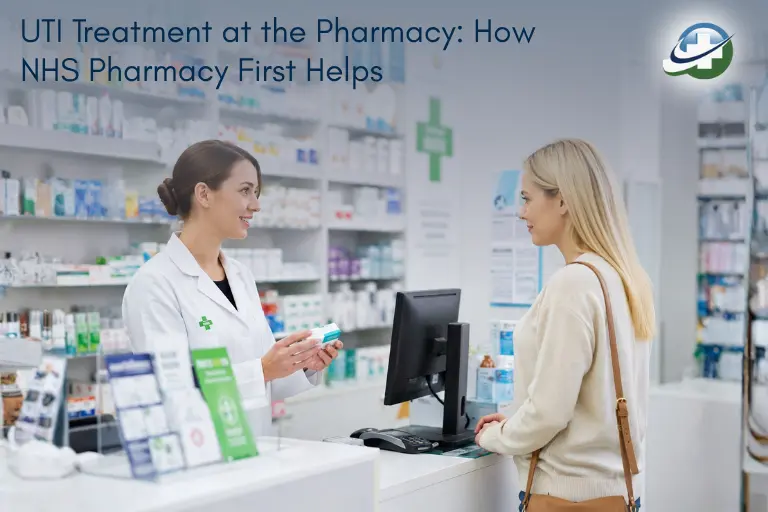
A urinary tract infection rarely waits for a convenient time to show up. The burning sensation, the constant urge to go, the dull ache in your lower abdomen, all of it tends to strike on a weekend or in the middle of a busy work week, right when booking a GP appointment feels impossible. This is exactly the gap that a modern uti treatment pharmacy service is designed to close.
Thanks to the NHS Pharmacy First service, women experiencing symptoms of an uncomplicated UTI can now walk into a participating community pharmacy, be assessed by a trained pharmacist, and in many cases leave with a prescription-free consultation and treatment plan on the same day. No GP referral. No lengthy wait. Just fast, clinically sound care from a healthcare professional you likely already know by name.
This guide breaks down exactly how the service works, who it is for, and what to expect from your visit at Chertsey Pharmacy, so you can make an informed decision the next time symptoms appear.
What Is NHS Pharmacy First?
NHS Pharmacy First is a national initiative that expanded the clinical role of community pharmacists across England. Rather than pharmacists only dispensing medicines that a GP has already prescribed, the scheme allows specially trained pharmacists to assess, treat, and where clinically appropriate, supply treatment for seven common conditions, one of which is uncomplicated urinary tract infections in women aged 16 to 64.
The goal is straightforward: reduce pressure on GP surgeries and A&E departments while giving patients quicker access to care for conditions that pharmacists are fully equipped to manage. You can review the full scope of the service on the NHS England Pharmacy First page. Every pharmacist delivering this service has completed additional clinical training and works within strict national clinical pathways, so the quality of assessment mirrors what you would receive from a GP for the same condition.
For anyone searching for a reliable nhs pharmacy first service, the key thing to understand is that this isn’t a watered-down alternative to a doctor’s visit. It’s a dedicated clinical pathway built specifically for conditions like uncomplicated UTIs, skin infections, and other minor ailments that don’t require the broader diagnostic scope of a GP consultation.
Understanding Uncomplicated UTIs
Before diving deeper into treatment options, it helps to understand what “uncomplicated” actually means in a clinical context. An uncomplicated UTI refers to a lower urinary tract infection, typically affecting the bladder, in an otherwise healthy person with no underlying structural or functional abnormalities of the urinary tract.
Common symptoms include:
- A burning or stinging sensation when urinating
- Needing to urinate more frequently than usual
- A strong, sudden urge to urinate, even when little comes out
- Cloudy, dark, or strong-smelling urine
- Mild discomfort or pressure in the lower abdomen or pelvic area
Symptoms that fall outside this pattern, such as fever, back or flank pain, blood in the urine, vomiting, or symptoms in men, pregnant women, or children, are considered more complex and typically require a GP or urgent care assessment rather than a pharmacy consultation. Pharmacists are trained to recognise these red flags and will refer you onward if your presentation doesn’t fit the uncomplicated category.
How UTI Treatment Pharmacy Services Work
Visiting a pharmacy for UTI symptoms follows a clear, structured process:
- Initial conversation. You’ll speak with the pharmacist, either at the counter or in a private consultation room, about your symptoms, how long you’ve had them, and your general health history.
- Clinical assessment. The pharmacist checks your symptoms against the national clinical pathway. This may include a simple urine dipstick test, though this isn’t always required depending on your symptom profile.
- Eligibility check. The pharmacist confirms you fall within the appropriate age range and that your symptoms match the uncomplicated UTI criteria.
- Treatment decision. If appropriate, the pharmacist can supply treatment directly under the Pharmacy First pathway. If not, they’ll refer you to your GP or another appropriate service.
- Advice and follow-up guidance. You’ll receive clear guidance on what to expect, when symptoms should improve, and what warning signs mean you should seek further medical attention.
The entire process is usually completed within a single visit, often in less time than it takes to sit in a GP waiting room.
UTI Antibiotics Pharmacy Access: What to Expect
One of the most common questions patients have is around medication. When people search for uti antibiotics pharmacy access, they’re usually asking whether a pharmacist can actually supply treatment on the spot, and the answer under Pharmacy First is generally yes, provided your case fits the uncomplicated UTI pathway.
That said, this article won’t specify particular medicines, brand names, or dosing information. Every case is different, and the exact treatment supplied depends on your individual health profile, allergies, current medications, and local clinical guidance. Your pharmacist will talk you through the specific treatment recommended for you during your consultation. If you’d like to review general information on this NHS service ahead of your visit, our Uncomplicated UTIs page has further details.
Pharmacy First vs GP Appointment: A Comparison
| Factor | Pharmacy First (UTI Pathway) | Traditional GP Appointment |
| Typical wait time | Often same day, sometimes immediate | Can range from same day to several days |
| Appointment booking | Walk-in or quick call ahead | Usually requires phone or online booking |
| Location access | Local high street pharmacy | GP surgery, sometimes further away |
| Clinical assessment | Trained pharmacist, national clinical pathway | GP, broader diagnostic scope |
| Best suited for | Uncomplicated UTIs in eligible women aged 16-64 | Complex symptoms, men, pregnant women, children, recurring infections |
| Follow-up referral | Pharmacist refers onward if criteria aren’t met | GP manages full care journey directly |
| Opening hours | Often extended, including evenings and weekends | Standard surgery hours in most cases |
This comparison isn’t about one option being universally better than the other. It’s about matching the right service to the right symptoms. For a straightforward, uncomplicated UTI, pharmacy assessment is often faster and just as clinically appropriate. For anything outside that scope, a GP remains the right first point of contact.
Benefits of Choosing Pharmacy First for UTIs
Speed of access. Same-day assessment removes the anxiety of waiting days while symptoms worsen.
No appointment bottleneck. Community pharmacies typically don’t require the same booking lead time as GP surgeries.
Reduced pressure on GP services. Freeing up GP capacity for patients who need it means the whole local healthcare system runs more efficiently.
Convenient locations. Pharmacies are often within walking distance of home or work, with extended opening hours that fit around daily life.
Consistent clinical standard. Pharmacists follow the same national clinical pathway used across England, so the quality of assessment is standardised regardless of which participating pharmacy you visit.
Privacy and comfort. Consultations typically take place in a private area, giving you the same confidentiality you’d expect from any healthcare setting.
Who Is Eligible for Pharmacy First UTI Treatment
The pharmacy first uti pathway is specifically designed for:
- Women aged 16 to 64
- Presenting with symptoms consistent with an uncomplicated lower urinary tract infection
- With no signs of a more complex infection (such as fever, flank pain, or systemic illness)
- Not pregnant
- Without a history of recurrent or complicated UTIs that would need specialist input
If you fall outside these criteria, don’t worry. Your pharmacist will still assess you and either refer you to your GP or point you toward the most appropriate next step. The goal is always getting you to the right care quickly, not turning you away without a plan.
Real-Life Use Cases
The working professional. Sarah notices burning sensations on a Tuesday morning before an important meeting. Instead of trying to get a same-day GP slot, she visits her local pharmacy during her lunch break, is assessed within fifteen minutes, and is back at her desk with a clear plan by early afternoon.
The weekend flare-up. James’s partner develops classic UTI symptoms on a Saturday when the GP surgery is closed. A quick call to a pharmacy offering Pharmacy First services confirms they can be seen that afternoon, avoiding an unnecessary trip to urgent care.
The repeat sufferer seeking a faster process. Priya has had uncomplicated UTIs before and recognises the symptoms early. Rather than going through the full GP booking process again, she uses the pharmacy pathway for a quicker assessment, since her presentation clearly fits the uncomplicated criteria.
Each of these scenarios reflects the everyday reality of why this service was introduced: minor, clearly defined conditions don’t need the full weight of a GP appointment slot to be managed safely and effectively.
Best Practices Before Your Pharmacy Visit
To make the most of your consultation:
- Note your symptoms and timeline. Knowing exactly when symptoms started and how they’ve progressed helps the pharmacist assess quickly.
- Bring a list of current medications. This includes anything over the counter, supplements, or existing prescriptions.
- Mention any known allergies. This is essential for safe and appropriate treatment decisions.
- Be upfront about pregnancy or underlying conditions. These factors change the appropriate care pathway and need to be flagged early.
- Ask questions. If anything about your treatment plan or next steps is unclear, ask before you leave. A good pharmacist will always take the time to explain.
- Call ahead if possible. While many pharmacies accept walk-ins, a quick call confirms availability and that the pharmacy currently offers the Pharmacy First UTI pathway.
Common Mistakes to Avoid
Ignoring symptoms that don’t fit the uncomplicated profile. Fever, back pain, or blood in urine need proper medical assessment, not a pharmacy shortcut.
Assuming every pharmacy offers the service. Not all pharmacies participate in Pharmacy First. Always confirm before visiting specifically for this purpose.
Skipping follow-up if symptoms don’t improve. If treatment doesn’t resolve symptoms within the expected timeframe, don’t simply wait it out. Go back for reassessment.
Self-diagnosing based on past experience alone. Even if you’ve had a UTI before, symptoms can sometimes signal something different. Let the pharmacist properly assess rather than assuming.
Withholding relevant health information. Leaving out details about pregnancy, allergies, or other medications can affect the safety and suitability of your treatment plan.
Delaying care altogether. Untreated UTIs can sometimes progress to more serious kidney infections. Early assessment, whether at a pharmacy or GP, matters.
Frequently Asked Questions
- What is NHS Pharmacy First for UTIs?
It’s an NHS service that allows trained community pharmacists to assess and, where appropriate, treat uncomplicated urinary tract infections in eligible women without needing a GP appointment first. - Can a pharmacist really treat a UTI without seeing a GP?
Yes. Under the national clinical pathway, pharmacists are trained and authorised to assess uncomplicated UTIs in women aged 16 to 64 and supply appropriate treatment directly when clinically suitable. - Do I need to book an appointment for Pharmacy First?
Many pharmacies accept walk-ins for this service, though calling ahead is a good idea to confirm the pharmacy offers Pharmacy First and to check current availability. - Is Pharmacy First suitable for men or children with UTI symptoms?
No. The uncomplicated UTI pathway under Pharmacy First is specifically designed for women aged 16 to 64. Men, children, and pregnant women should be assessed by a GP. - What happens if my symptoms don’t fit the uncomplicated UTI criteria?
The pharmacist will refer you to your GP or another appropriate service rather than attempting to treat symptoms outside their clinical scope. - Is this service free through the NHS?
Pharmacy First is provided as part of NHS community pharmacy services. Your pharmacist can confirm the specifics of what’s included during your consultation. - How quickly will I know if treatment is working?
Your pharmacist will explain the expected timeframe for improvement during your consultation and advise you on when to seek further help if symptoms persist.
Conclusion
UTI symptoms are uncomfortable, disruptive, and rarely convenient, but getting proper care no longer has to mean a long wait for a GP slot. With the growth of uti treatment pharmacy services under NHS Pharmacy First, eligible women can now access fast, clinically sound assessment and treatment for uncomplicated UTIs directly through their local pharmacy.
At Chertsey Pharmacy, our trained team is here to help you navigate exactly that kind of care, with the convenience, privacy, and clinical standard you’d expect from any healthcare professional. If you’re experiencing symptoms and think this pathway might be right for you, the best next step is a conversation with your pharmacist.
Ready to get assessed today? Contact Chertsey Pharmacy or book your appointment online to speak with our team about NHS Pharmacy First UTI treatment.