
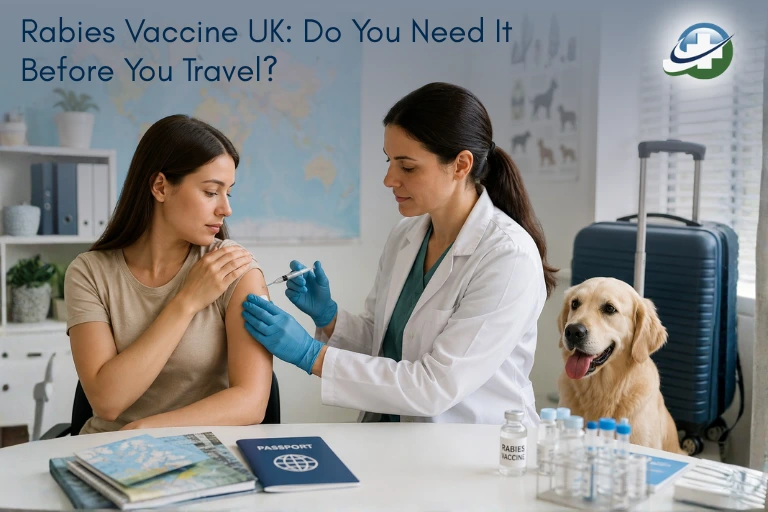
What Is Rabies and Why It Still Matters for UK Travellers
Rabies is a viral infection that attacks the brain and nervous system. It’s almost always fatal once symptoms appear, which is exactly why prevention matters so much. The good news is that rabies is entirely preventable, and the rabies vaccine UK clinics offer is one of the simplest ways to protect yourself before you fly.
The UK itself is considered rabies free, aside from a small number of cases in wild bats. But the moment you step off a plane in parts of Asia, Africa, or Central and South America, the picture changes. Dogs, bats, cats, and even monkeys can carry the virus in these regions, and a bite or scratch that seems minor can carry serious risk.
This is why so many UK travellers now ask the same question before booking flights: do I actually need the rabies vaccine, or am I overthinking it? The honest answer depends on where you’re going, how long you’re staying, and what you’ll be doing while you’re there.
Rabies Vaccine UK: Who Actually Needs It
Not every traveller needs pre-exposure rabies vaccination, but a growing number of people fall into the “should seriously consider it” category. You’re a good candidate for the rabies vaccine UK health advisors recommend if any of the following apply to your trip.
You’re travelling for a month or longer. Extended stays increase your overall exposure risk, and access to urgent medical care can be limited depending on where you’re staying.
You’ll be far from reliable medical care. If your itinerary includes rural areas, remote hiking routes, or countries where rabies immunoglobulin isn’t readily available, pre-exposure vaccination becomes far more important.
Your trip involves outdoor or adventure activities. Cycling, trail running, camping, or volunteering with animals all increase the chance of contact with wildlife or stray animals.
You work with animals professionally. Vets, wildlife researchers, animal handlers, and aid workers who interact with animals regularly should speak to an occupational health provider about ongoing protection.
You’re travelling with children. Children are naturally curious around animals and may not always report a lick, scratch, or nip straight away, which raises their risk profile compared to adults.
If you tick even one of these boxes, it’s worth booking a consultation at a rabies vaccination clinic before you go, rather than waiting until you’re already abroad.
Pre-Exposure vs Post-Exposure Rabies Vaccination
There are two distinct paths when it comes to rabies protection, and understanding the difference helps you make an informed decision.
Pre-exposure rabies vaccine is given before you travel, as a preventative measure. It doesn’t remove the need for treatment if you’re bitten or scratched later, but it significantly simplifies and speeds up that treatment, and in many cases removes the need for rabies immunoglobulin, which can be difficult to source in remote locations.
Post-exposure treatment is given after a bite, scratch, or lick from a potentially infected animal, regardless of whether you had the pre-exposure vaccine or not. If you’re bitten anywhere in the world where rabies is present, you should clean the wound immediately with soap and running water for several minutes and seek medical attention as soon as possible, even if you were vaccinated beforehand.
The key takeaway is this: pre-exposure vaccination through a rabies vaccination UK provider doesn’t make you immune to needing care after a bite, but it does make that care faster, simpler, and more accessible wherever you are in the world.
Rabies is almost always preventable with prompt medical care, but acting quickly is essential after any potential exposure. The NHS rabies information provides further details on symptoms, treatment, and when emergency medical attention is needed, helping travellers make informed decisions before and during their trip.
How the Rabies Vaccination UK Schedule Works
For exact dosing schedules and the most current clinical guidance, always check with a registered pharmacist or GP, or refer to Chertsey Pharmacy’s rabies vaccine page for up to date information specific to your circumstances.
In general terms, pre-exposure rabies vaccination is given as a short course of injections into the upper arm, spread out over several weeks ahead of travel. This is one of the main reasons early planning matters. Leaving your vaccination until the week before departure often means you won’t be able to complete the full course in time, which is why travel health professionals typically recommend booking at least four to eight weeks before you fly.
After vaccination, some people experience mild, temporary side effects such as soreness, redness, or swelling at the injection site, along with the occasional mild headache. These symptoms usually settle within a day or two and are a normal sign that your immune system is responding.
Benefits of Getting Vaccinated Before You Travel
Faster, simpler treatment if you’re exposed. Pre-vaccinated travellers often need fewer follow-up doses after a bite, and in many cases don’t require rabies immunoglobulin, which isn’t always available outside major cities.
Peace of mind in remote areas. If your trip takes you off the beaten path, knowing you’ve already started building immunity means one less thing to worry about.
Protection for the whole family. Children, in particular, benefit from pre-exposure protection given how often minor animal encounters go unreported.
Reduced risk of treatment delays. Post-exposure treatment works best when started quickly. Being pre-vaccinated removes some of the time pressure and logistical stress of sourcing full treatment abroad.
A proactive approach to travel health. Rabies is nearly always fatal once symptoms develop, but it’s also one of the most preventable diseases in travel medicine when addressed early.
Rabies Vaccine Clinic vs GP: Where Should You Go
Many UK travellers assume their GP is the only option, but that’s not always the case, and it’s not always the fastest route either.
GP surgeries can sometimes offer travel vaccinations, though rabies vaccine availability varies by practice, and appointment waiting times can be longer, especially during busy travel seasons.
A dedicated rabies vaccine clinic, such as the travel health service at Chertsey Pharmacy, is often better equipped to handle rabies vaccination alongside your other travel jabs in a single, streamlined visit. Pharmacist-led travel clinics typically offer more flexible appointment slots, same-week bookings, and staff who specialise specifically in travel health rather than general practice.
If you’re planning a trip that requires several vaccines at once, such as typhoid, hepatitis A, or tetanus alongside rabies, a rabies vaccination clinic that offers a full travel health consultation can save you multiple appointments and make sure nothing gets missed.
Common Use Cases: Who Books a Rabies Vaccination Clinic Visit
- Backpackers and long-term travellers heading to Southeast Asia, Sub-Saharan Africa, or South America for a month or more
- Volunteers and aid workers stationed in rural communities with limited access to emergency care
- Cyclists and trekkers planning multi-day routes through remote or wildlife-dense areas
- Families travelling with young children to regions where rabies is present
- Veterinary staff, wildlife handlers, and researchers who work directly with animals as part of their job
- Expats relocating to a country where rabies is endemic
Pre-Exposure Rabies Vaccine: Comparison at a Glance
| Factor | Pre-Exposure Vaccination | No Pre-Exposure Vaccination |
| Doses needed after a bite | Fewer follow-up doses typically required | Full post-exposure course required |
| Need for rabies immunoglobulin | Usually not required | Often required, and harder to source abroad |
| Speed of protection after exposure | Faster response due to existing immunity | Slower, as immunity starts from zero |
| Best suited for | Long trips, remote travel, high-risk activities, animal work | Short trips to low-risk, urban destinations |
| Planning time required | 4 to 8 weeks before travel | Minimal, but urgent care needed after any bite |
Best Practices Before Your Trip
Book early. Aim for at least four to eight weeks before departure to comfortably complete your vaccination schedule.
Combine your travel vaccines. A single consultation at a rabies vaccination clinic can often cover rabies alongside typhoid, hepatitis A, and other destination specific vaccines.
Research your destination properly. Look beyond the country name and consider the specific regions, activities, and accommodation types on your itinerary, since risk varies significantly within the same country.
Know what to do after a bite. Clean any wound immediately with soap and running water, then seek medical attention without delay, even if you’ve already been vaccinated.
Keep a record of your vaccinations. A simple vaccination card or digital record makes it much easier for medical staff abroad to advise you correctly if you’re exposed.
Brief your children. Make sure kids understand that any scratch, bite, or lick from an animal abroad needs to be reported straight away, no matter how small it seems.
Common Mistakes to Avoid
Leaving it until the last minute. The pre-exposure schedule takes several weeks to complete properly. Booking too close to departure often means an incomplete course.
Assuming all destinations carry equal risk. Risk levels vary enormously between rural and urban areas within the same country, so a blanket assumption either way isn’t safe.
Ignoring minor scratches or licks. Even small, seemingly harmless contact with an animal should be treated seriously in a rabies risk country.
Skipping post-exposure care because you were pre-vaccinated. Pre-exposure vaccination reduces the urgency and complexity of treatment, but it does not remove the need for medical attention after a bite.
Relying on general advice instead of a proper consultation. Every itinerary is different, and a travel health professional can tailor advice to your specific trip rather than generic guidance found online.
Rabies Vaccine Cost Considerations
Costs for rabies vaccination in the UK vary depending on the provider, the number of doses required, and whether it’s accessed privately or through certain NHS pathways. Rather than relying on outdated figures, it’s best to check current pricing directly with your chosen rabies vaccine clinic, as this ensures you get accurate, up to date information relevant to your specific travel plans. Chertsey Pharmacy can talk you through what’s involved for your itinerary during a travel health consultation.
FAQs
- Do I need the rabies vaccine for every country I visit?
No. Rabies risk varies significantly by country and even by region within a country. A travel health consultation can assess your specific itinerary and tell you whether pre-exposure vaccination is recommended for your trip. - Is the rabies vaccine safe for children?
Yes, it’s considered safe for children, and in many cases especially important for them, since young children are more likely to have unreported contact with animals. A pharmacist or GP can advise on suitability based on age and health history. - What happens if I’m bitten after being vaccinated?
You still need medical attention. Clean the wound immediately and seek care as soon as possible. Being pre-vaccinated typically means a simpler, faster follow-up treatment, often without the need for rabies immunoglobulin. - How far in advance should I book my rabies vaccination?
Ideally four to eight weeks before travel, since the pre-exposure schedule involves multiple doses spread across several weeks. - Can I get the rabies vaccine alongside other travel vaccines?
Yes. Many travellers combine rabies vaccination with jabs like typhoid, hepatitis A, or tetanus in the same visit to a rabies vaccination clinic, saving time and reducing the number of appointments needed. - Does the rabies vaccine contain a live virus?
No. Vaccines used in the UK contain an inactivated form of the virus, meaning it isn’t possible to catch rabies from the vaccine itself. - Is a booster dose ever needed?
For most travellers, the initial course provides solid protection for typical holiday timeframes. Those with ongoing occupational exposure, such as vets or wildlife workers, may be advised to have periodic blood tests or booster doses.
Final Thoughts and Next Steps
Rabies is rare in the UK, but that changes the moment you travel to parts of the world where it’s still present in dogs, bats, and other animals. The rabies vaccine UK travel clinics provide won’t make you immune to the need for post-bite care, but it does make that care faster, simpler, and far less stressful if you’re somewhere with limited access to medical facilities.
If your trip involves extended travel, remote destinations, outdoor activities, or contact with animals in any capacity, it’s worth having a proper conversation with a travel health professional well before you pack your bags.
Chertsey Pharmacy offers a dedicated travel health service where pre-exposure rabies vaccination can be combined with your other travel jabs in a single, straightforward visit.Contact our team today and travel with one less thing to worry about.