
If you are planning a trip to parts of Africa or South America, chances are you have already heard about the yellow fever vaccine. It is one of those travel vaccines that often comes with a lot of questions. Is it safe? What are the side effects? Who really needs it? And are there people who should stay away from it altogether?
These are fair questions, and you deserve straight answers. So let us break it all down in a way that actually makes sense.
What Is Yellow Fever and Why Does the Vaccine Matter
Yellow fever is a serious viral disease spread through the bite of infected mosquitoes. The name comes from the yellowing of the skin and eyes, which happens when the disease attacks the liver. In severe cases, it can be life-threatening.
The good news is that the yellow fever vaccine has been around for decades and it works extremely well. A single dose gives most people lifelong protection. That is a big deal when you consider how dangerous the disease itself can be.
Many countries in Africa and South America require proof of yellow fever vaccination before you can even enter. So for travelers heading to those regions, getting vaccinated is not just about staying healthy. It is often a travel requirement you cannot skip.
How Safe Is the Yellow Fever Vaccine, Really?
Here is the honest answer: the yellow fever vaccine is considered one of the safest and most effective vaccines ever developed. It has been used for over 80 years, and hundreds of millions of doses have been given around the world.
That said, like any vaccine, it does carry some risks. Most people handle it without any serious problems. But there are a small number of people who can experience more significant reactions, and it is important to know who those people are.
For healthy adults and children over 9 months of age, the benefit of the vaccine far outweighs the risk in most cases, especially if they are traveling to a country where yellow fever is present.
Common Side Effects of the Yellow Fever Vaccine
Most people who get the yellow fever vaccine experience only mild side effects, and these usually go away on their own within a few days. Common reactions include:
Mild and expected reactions:
- Soreness, redness, or swelling at the injection site
- Low-grade fever
- Headache
- Muscle aches
- Fatigue or feeling tired for a day or two
These reactions are actually a sign that your immune system is responding to the vaccine and building protection. They are not something to be alarmed about.
Most people go about their normal day after getting the shot. A small number might feel a bit under the weather for a day or two. Resting and staying hydrated usually helps.
Serious but Rare Side Effects
Now here is where it gets more important to pay attention. A very small number of people can develop serious reactions after getting the yellow fever vaccine. These are rare, but they are real.
Severe allergic reaction (anaphylaxis): This can happen with many vaccines and usually occurs within minutes to an hour after the shot. This is why vaccination clinics ask you to wait for about 15 to 30 minutes after receiving the vaccine. Symptoms include difficulty breathing, swelling of the face or throat, rapid heartbeat, and dizziness.
Yellow fever vaccine-associated viscerotropic disease (YEL-AVD): This is a very rare but serious condition where the vaccine virus spreads to the organs, similar to how the actual yellow fever disease behaves. It can be life-threatening. The risk is extremely low for most healthy adults but higher in people over 60 years of age.
Yellow fever vaccine-associated neurological disease (YEL-AND): This rare condition affects the nervous system and can cause symptoms like confusion, high fever, or in very rare cases, brain inflammation. Again, the risk is highest in infants under 6 months and adults over 60.
These serious side effects are rare enough that for most healthy travelers going to high-risk areas, the vaccine is still strongly recommended. But this is exactly why the vaccine should only be given by an authorized yellow fever vaccination center, and why the health history of each person matters before they receive it.
Who Should Not Get the Yellow Fever Vaccine
Not everyone should receive the yellow fever vaccine. There are certain groups where the risks can outweigh the benefits. These include:
Infants under 6 months: Their immune systems are too immature, and the risk of serious neurological complications is higher.
Infants between 6 and 8 months: Generally avoided unless travel to a high-risk area is unavoidable. Always consult a doctor.
People with a severe egg allergy: The vaccine is produced in eggs, so a serious egg allergy can be a contraindication. However, a mild egg intolerance is usually not a concern. Your doctor will guide you based on the severity.
People with a weakened immune system: This includes people living with HIV (especially with low CD4 counts), those undergoing chemotherapy, people on high-dose steroids, or anyone with conditions affecting the immune system. The vaccine contains a live but weakened virus, which could cause problems in people who cannot fight off infections normally.
People with thymus gland problems: Including those who have had their thymus removed or have a condition affecting it, such as myasthenia gravis or thymoma.
Adults over 60 years of age: They are at higher risk of the rare serious reactions mentioned above. This does not mean they absolutely cannot get vaccinated, but the risk-benefit discussion with a doctor is even more important.
Pregnant and breastfeeding women: Generally advised to avoid the vaccine unless the risk of yellow fever exposure is considered high. A healthcare provider should be consulted.
Benefits of the Yellow Fever Vaccine
Let us not lose sight of why this vaccine exists and why it matters so much.
Yellow fever has no cure. Once you get it, treatment is only about managing symptoms and supporting the body. In severe cases, the fatality rate can be quite high.
The vaccine, on the other hand, is effective in about 99% of people after a single dose. Protection kicks in within about 10 days of vaccination. And for most people, a single dose provides immunity for life. Some countries still require a booster every 10 years for entry purposes, but the World Health Organization has confirmed that one dose is enough for lasting protection.
When you weigh the genuine risk of contracting yellow fever in an endemic region against the small chance of a serious vaccine reaction, the numbers almost always favor getting vaccinated if you are in a risk zone.
What to Expect Before, During and After Vaccination
Before you get the vaccine, your healthcare provider or travel clinic will ask about your medical history. Be honest and thorough. Mention any immune system conditions, past allergic reactions to vaccines, any medications you take, and whether you are pregnant or breastfeeding.
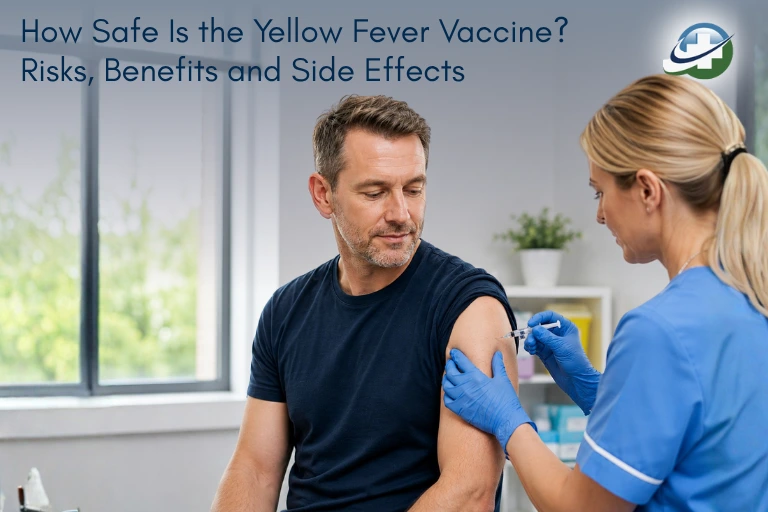
During the appointment, the shot is given as an injection, usually in the upper arm. It takes only a few seconds.
After the shot, you will be asked to wait at the clinic for a short time in case of any immediate allergic reaction. Once you leave, watch out for any unusual symptoms in the following days and contact a doctor if anything concerns you.
You will also receive an International Certificate of Vaccination or Prophylaxis, commonly called the yellow card. Keep this safe because many countries will ask for it at the border.
Frequently Asked Questions (FAQs)
How long does the yellow fever vaccine last?
A single dose of the yellow fever vaccine provides lifelong protection for most people. The World Health Organization updated its guidelines to reflect that boosters are generally not needed.
Can I get yellow fever from the vaccine?
The vaccine uses a live but weakened form of the virus. In extremely rare cases, the vaccine can cause a condition similar to yellow fever disease, but this is very uncommon in healthy people.
Is the yellow fever vaccine safe for children?
It is recommended for children 9 months and older who are traveling to areas where yellow fever is present. It should not be given to infants under 6 months.
Do I need the yellow fever vaccine if I am just in transit?
It depends on the countries involved. Some countries require proof of vaccination even for transit passengers if they have traveled through a yellow fever risk zone. Always check the entry requirements for every country in your itinerary.
Can I get other travel vaccines at the same time as the yellow fever vaccine?
In most cases, yes. Your travel health provider can advise based on your full vaccination plan.
How soon before travel should I get vaccinated?
At least 10 days before travel, since that is how long it takes for immunity to fully develop.
What if I cannot get vaccinated for medical reasons?
A medical waiver can sometimes be issued by an authorized vaccination center. However, this does not guarantee entry into every country.
Final Thoughts
The yellow fever vaccine has protected millions of travelers and residents in risk zones for decades. For the vast majority of healthy people, it is safe, highly effective, and offers lifelong protection after a single dose.
Like any medical decision, it comes with a small set of risks that are worth understanding. Knowing who should be cautious, what side effects are normal, and what rare reactions to watch for puts you in a much better position to make an informed choice.
If you are planning to travel to a yellow fever risk area, speak with a travel health specialist or your doctor well before your departure date. They can look at your full health picture and give you personalized guidance based on your situation.
Staying informed is the first step to staying protected.